
Manual retractable awnings use a hand crank to roll fabric out over a deck and wind it back into an aluminum housing. Fixed awnings stay out year-round on a rigid frame. We design, install and service both, and for most Ontario decks we recommend a retractable: manual on a small opening, motorised on a wide one.









Retractable vs fixed awnings
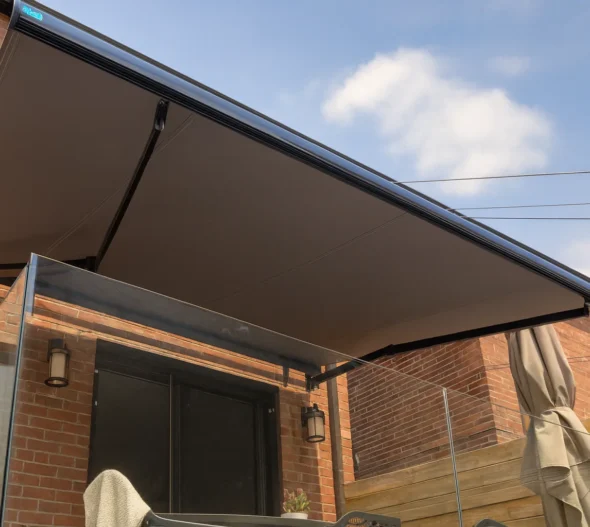
A fixed awning is a permanent canopy. Fabric is stretched over a welded aluminum frame, the frame is bolted to the wall, and it stays there through every season until someone takes it down. A retractable awning is the opposite idea: the fabric lives on a roller tube inside an aluminum housing, folding arms under spring tension push it out when you want shade, and it rolls away flat against the wall when you don't.
Retractables come two ways. A manual awning is driven by a hand crank that you hook into a gear at one end of the housing; thirty seconds of winding gets you full extension, and the same winding brings it home. A motorised one runs on a tube motor inside the roller, wired to a switch or a remote, and can take sun and wind sensors that retract it on their own. Mechanically the two are the same awning. The only difference is what turns the tube.
We install all of it the same careful way. We measure the opening, check what is actually behind your cladding, and set brackets into structure, not into siding. Where the wall is brick veneer, stucco or a fascia board with nothing solid behind it, we reinforce or we move the mount to the roof rafters. Motorised units get a dedicated outlet or a hardwired feed run by a licensed electrician. Then we extend, level, set the pitch, and show you how to crank or program it before we leave.
What it solves
Shade on a deck you also want sun on
Most people want shade in July and light in October. A permanent awning for a deck makes that choice once, for good, and the deck under it stays dim and cool all year. A retractable gives you the afternoon off and the evening back. If your deck is the only sunny spot on the lot, that flexibility matters more than people expect.
Heat coming through patio doors
West-facing glass turns a living room into a greenhouse by four o'clock. Stopping sun outside the glass, before it becomes heat inside, is far more effective than any blind. Both awning types do this. The retractable lets you pull the shade back in shoulder season so that same glass warms the room for free when you want it to.
A door or storefront that needs cover every day
Over an entry, a service door or a shop front, the shade needs to be there whether anyone thought about it or not. That is the clearest case for a fixed frame: no operation, no crank, no motor to service, and a shape that can carry signage or lettering. We also size them to clear door swings and keep the leading edge above head height.
Wide openings where cranking gets old
A manual awning canopy is fine up to a point. Past roughly a four-metre width the roller is heavy, the crank takes longer, and we find people stop bothering. That is where a motor earns its cost. One button, both hands free, and wind and sun sensors available so the awning protects itself when you're at work.
Rain you want to sit through
A retractable at proper pitch sheds light rain and keeps a table dry. Neither type is a roof. Heavy rain pools on fabric, and pooling water is what bends arms and tears seams. If you want to sit outside through real weather, we would steer you to a louvered roof instead and say so at the estimate.
What it costs
Supplied and installed, a single screen has ranged from $2,900 to $21,900 on real jobs since 2022.
Every project is unique. The final figure depends on the size and number of openings, the options you choose and the site itself, and we put it in writing after a free on-site measure.
What moves the number:
- Projection and width: a deeper reach over a larger patio needs a stronger arm system.
- Motorised versus manual hand-crank operation, and whether wind and sun sensors are added.
- Fabric grade and pattern, since acrylic and solution-dyed fabrics carry different costs.
- Whether the mounting wall or fascia needs reinforcement before the bracket can go on.
- Access and height of the install on the building.
- The frame colour or finish chosen to match the house.
- Whether lighting or heating is integrated into the awning housing.
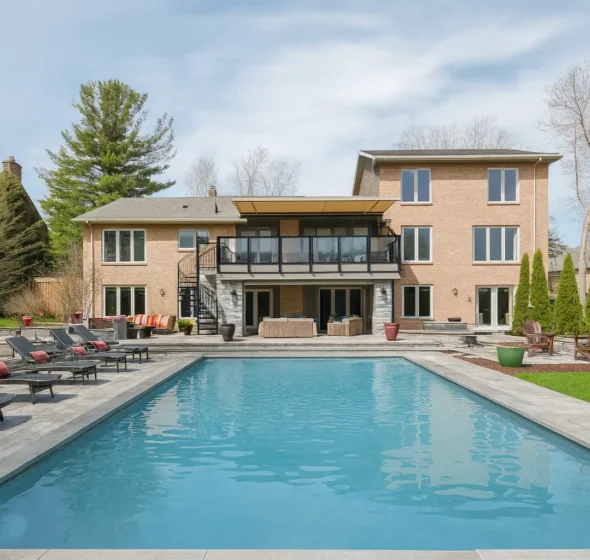
Jobs we've done
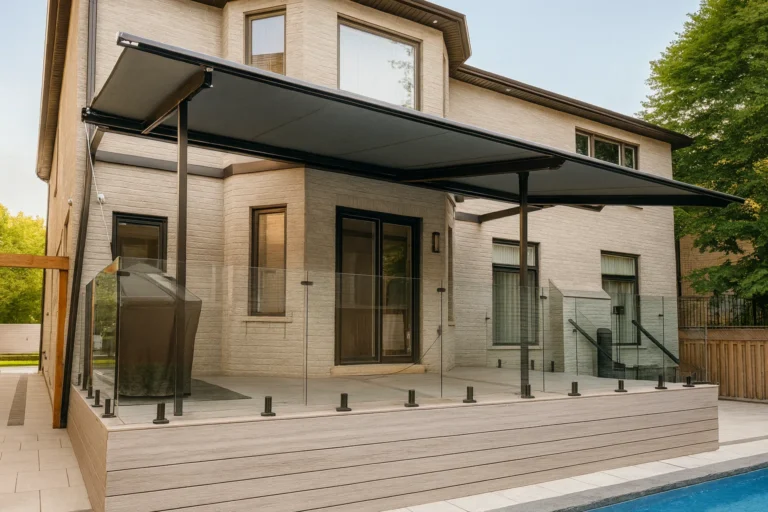
Retractable awning over a glass-railed pool deck
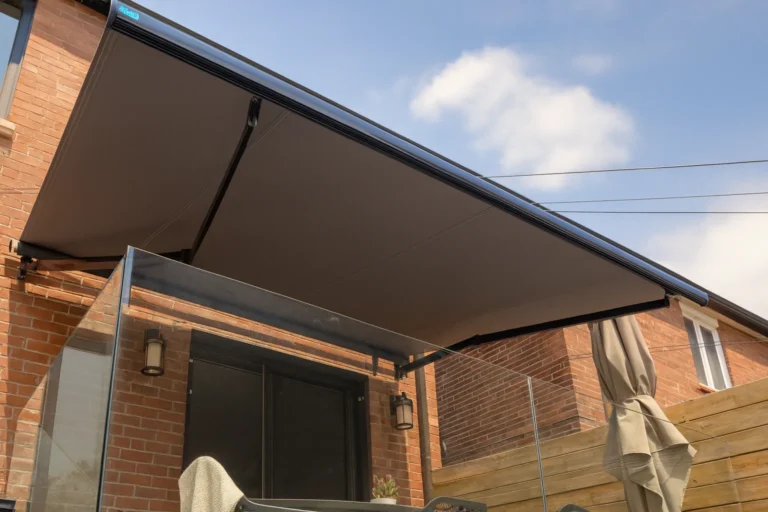
Wall-mounted retractable awning over a patio
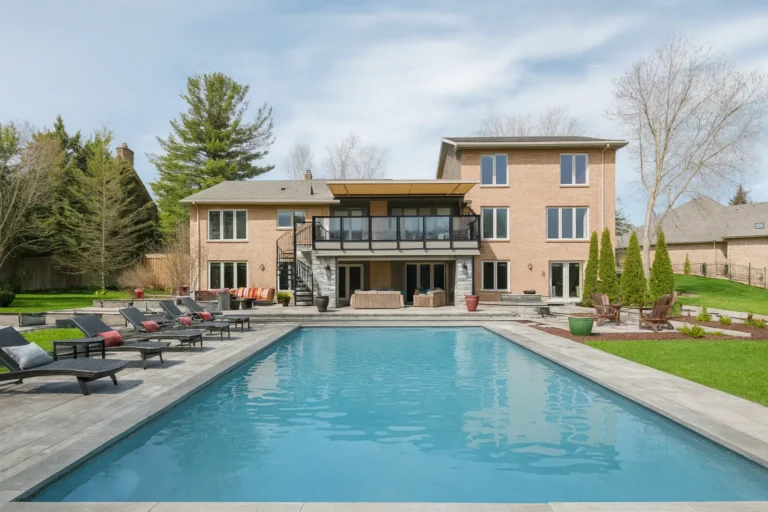
Retractable awning over a rear balcony
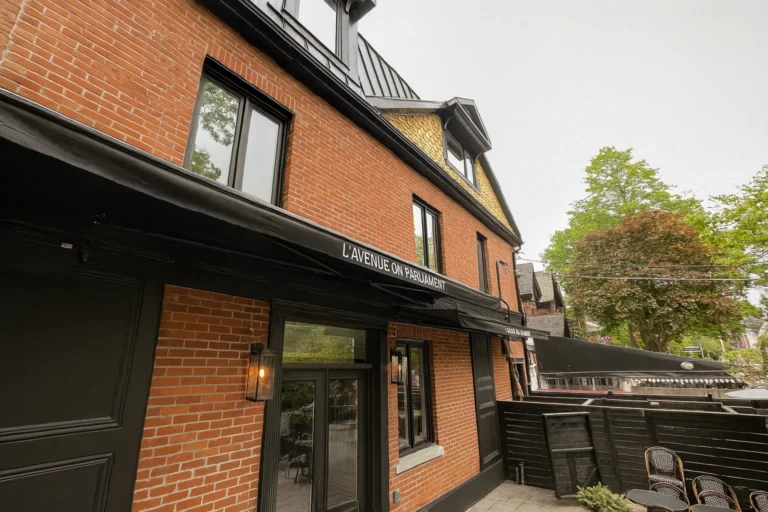
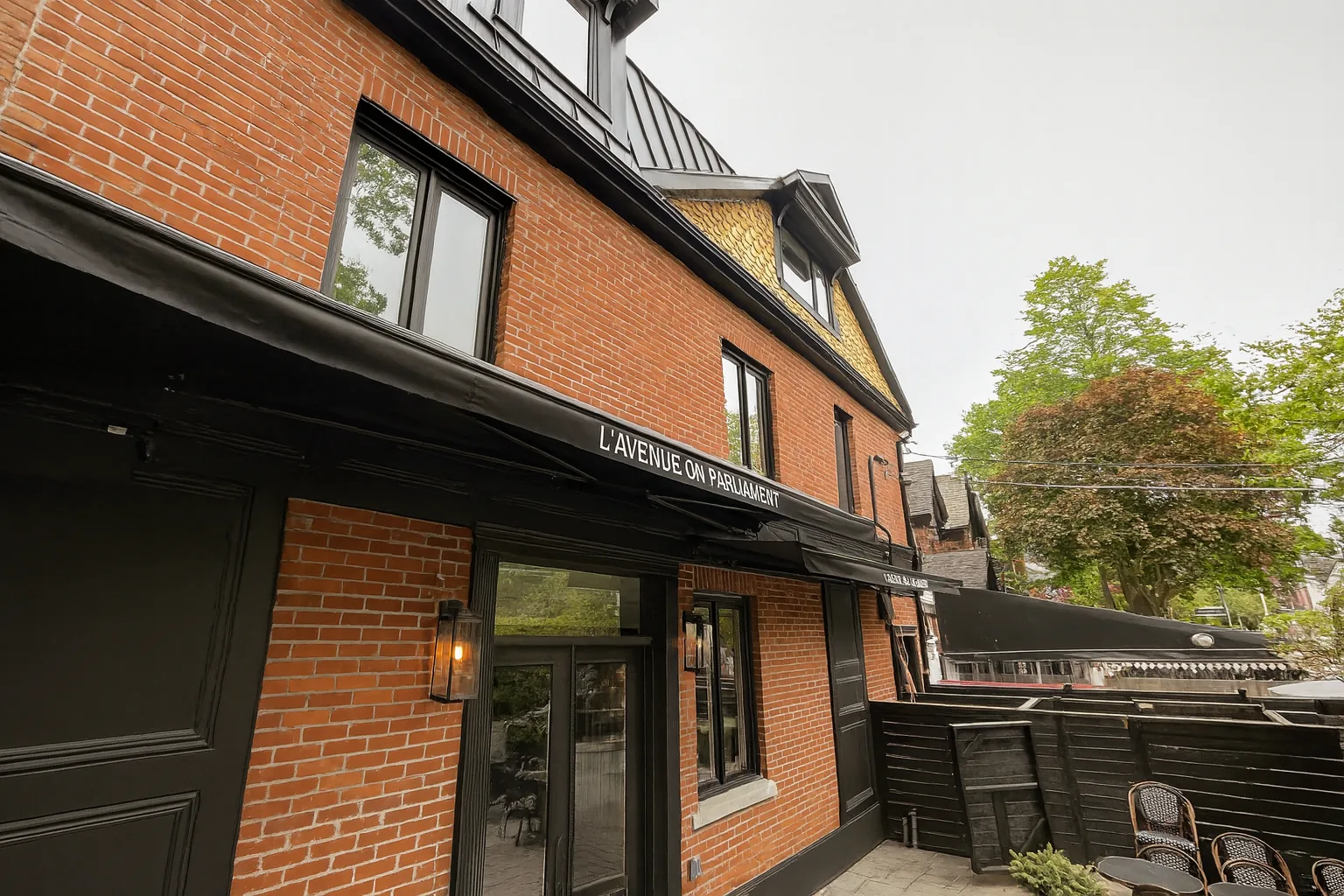
Retractable awning on a restaurant storefront, Toronto
If a fixed frame is out and you are now weighing a folding-arm awning against a louvered roof you can sit under in the rain, start on the awnings hub. It lays out sizes, fabrics and operation side by side.
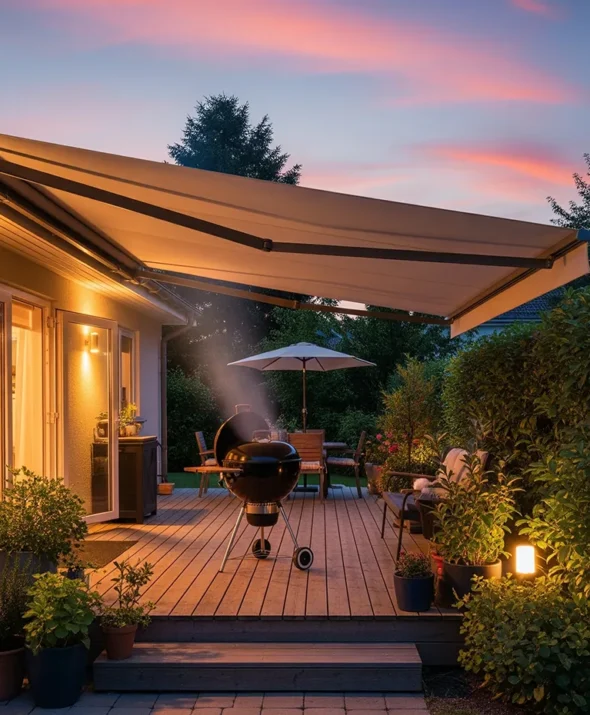
How the ROLLerUP® Process Works
Consultation
We begin with a free consultation to understand your needs and space. Our experts will help you select the perfect shading solution.
Custom Design & Quote
We provide a custom design based on your space and preferences, along with a clear, no-hidden-cost quote.
Professional Installation
Our team installs your new shading system quickly and professionally, ensuring a seamless fit and finish.
Post-Installation Support
After installation, we offer maintenance tips and ongoing support to ensure you’re fully satisfied.
Frequently Asked Questions
Where we install this
Ontario makes this decision for you more often than people expect. Our summers justify the shade and our winters rule out leaving fabric extended, so a retractable that rolls away in November suits most houses here better than a permanent canopy. Older neighbourhoods bring their own problem: brick veneer, aluminum fascia and insulated panel walls that look solid and are not, which is why we open things up before we bolt. Condo and townhouse owners should check their declaration, since many boards restrict anything fixed to a facade but allow a retractable. We have completed 23 installs in Toronto on this product line since 2022.
More about retractable awnings
Get a free on-site estimate
We measure the opening, check what is behind the wall, and tell you which of the two we would put there.