
A retractable awning mounts flat against your house or fascia and folds away in seconds; a louvered pergola is a standalone aluminum roof with rotating blades that opens to the sky. Awnings cost less and suit decks and patios close to the house. Pergolas cost more, stand on their own posts, and handle rain and snow while open.










Awning vs pergola: which outdoor cover is right for you
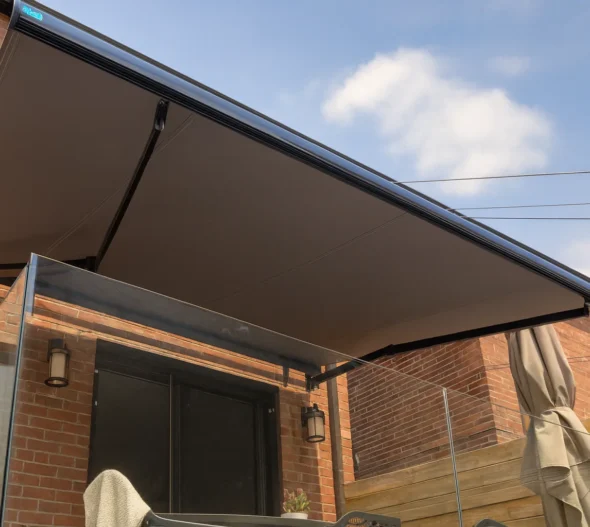
A retractable awning is a fabric cover on a folding arm system fixed to your wall or fascia. The arms push the fabric out over a patio or deck and fold flat back against the house when you don't need shade. We mount the bracket to the wall or a reinforced fascia board, run power to a tubular motor if you choose motorised operation, and set the pitch so rain runs off rather than pooling on the fabric.
A louvered pergola is a standalone aluminum roof structure with its own posts, sitting apart from the house like a gazebo. The roof is built from a row of rotating aluminum blades that tilt open to let light and air through, or close flat to shed rain. We set posts on footings, level the structure, and wire the louver motor and any integrated gutter or lighting before the roof goes on.
A fixed fabric canopy is the simplest of the three: a frame and fabric panel bolted in place, with no moving parts. It gives permanent shade over a doorway or small patio but can't retract in a storm or open to the sun in winter, so it's a narrower fit than either of the other two.
What it solves

Cutting direct sun without blocking the view
A retractable awning reads almost like a sunshade when it's in use and disappears against the house when it's not, so you keep an open view most of the year. A louvered pergola's blades tilt to any angle between full sun and full shade, so you can dial in how much light reaches the table without retracting anything at all.

Staying out in rain
We tell every awning customer to retract before a heavy rain – the fabric pitch sheds a shower but pooling water can stretch or tear it over time. A louvered pergola is built to stay outside in rain: close the blades flat and the roof channels water into a gutter system, so you can leave it set and forget it through a wet weekend.

Handling wind
Awnings are the more exposed structure in wind because the fabric and arms act like a sail; we fit wind sensors that retract the awning automatically once gusts cross a set speed. A pergola's posts and footings make it the steadier option, though we still recommend closing the louvers flat in a windstorm rather than leaving them tilted open.

Winter and snow load
We retract every awning for winter – the fabric and arms were never meant to carry snow weight, and leaving one extended risks bending the arm. A louvered pergola's aluminum roof can shed light snow when closed, but heavy accumulation still needs to be cleared by hand; neither product is designed to be a load-bearing roof.

How the two look on a property
An awning attaches to the wall or fascia, so it keeps your roofline simple and reads as part of the house. A pergola stands on its own posts away from the building, which makes it feel more like an outdoor room – a better fit for a larger patio where you want a defined space rather than an extension of the house.

Cost in plain terms
An awning is the simpler structure – no posts, no footings, less aluminum – so it's the lower-cost option of the two. A pergola costs more because it's a freestanding roof: posts, footings, a heavier louvered roof assembly and usually a bigger motor. If budget is the deciding factor, start with an awning quote and compare from there.
What it costs
Supplied and installed, a single screen has ranged from $2,900 to $21,900 on real jobs since 2022.
Every project is unique. The final figure depends on the size and number of openings, the options you choose and the site itself, and we put it in writing after a free on-site measure.
What moves the number:
- the projection and width of the awning – a deeper reach over a larger patio needs a stronger arm system
- motorised versus manual hand-crank operation
- whether wind and sun sensors are added
- the fabric grade and pattern selected
- whether the mounting wall or fascia needs reinforcement before the bracket goes on
- access and height of the install on the building
- the frame colour or finish chosen to match the home
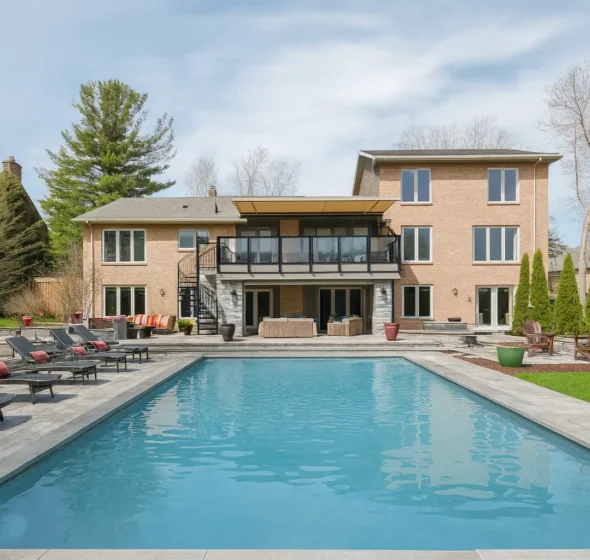
Jobs we've done
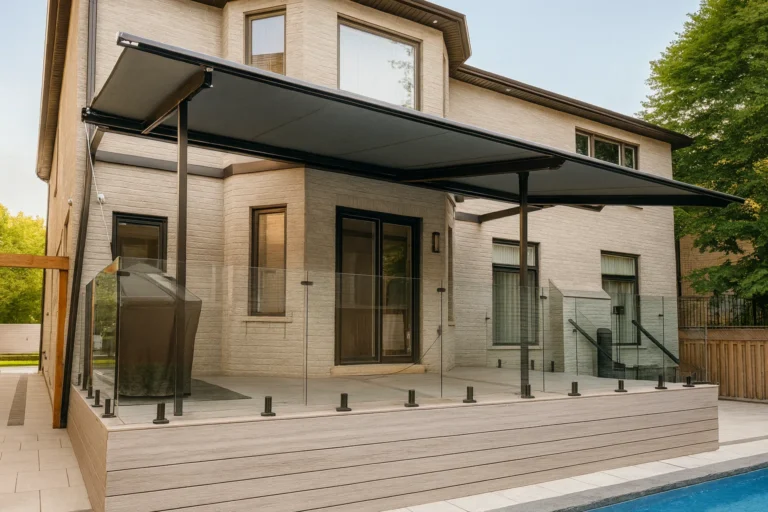
Retractable awning over a glass-railed pool deck
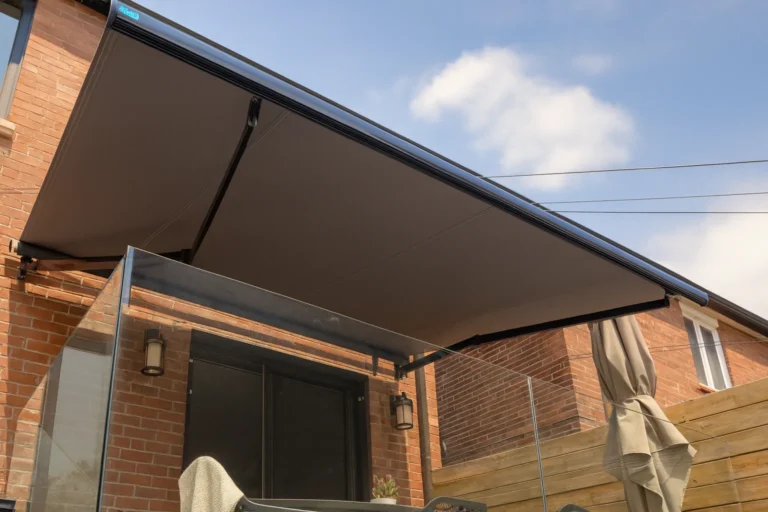
Wall-mounted retractable awning over a patio
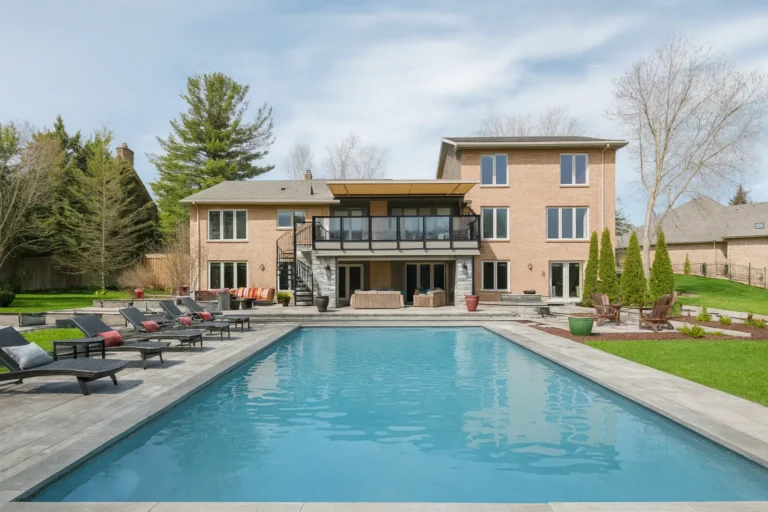
Retractable awning over a rear balcony
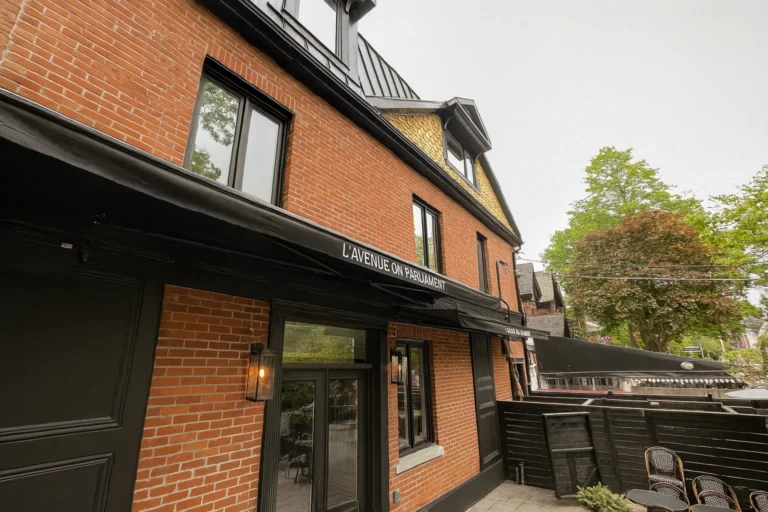
Retractable awning on a restaurant storefront, Toronto
If you already know you want a retractable awning, our awnings hub covers sizing, motorisation and fabric options in detail.
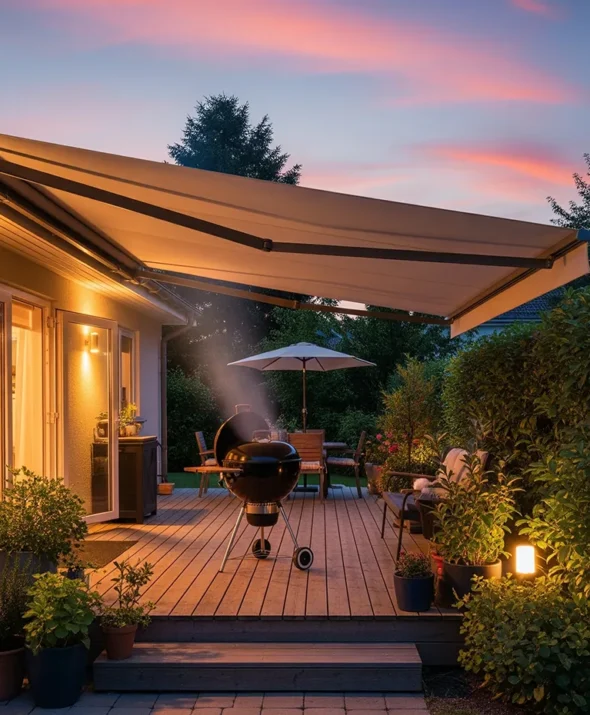
How the ROLLerUP® Process Works
Consultation
We begin with a free consultation to understand your needs and space. Our experts will help you select the perfect shading solution.
Custom Design & Quote
We provide a custom design based on your space and preferences, along with a clear, no-hidden-cost quote.
Professional Installation
Our team installs your new shading system quickly and professionally, ensuring a seamless fit and finish.
Post-Installation Support
After installation, we offer maintenance tips and ongoing support to ensure you’re fully satisfied.
Frequently Asked Questions
Where we install this
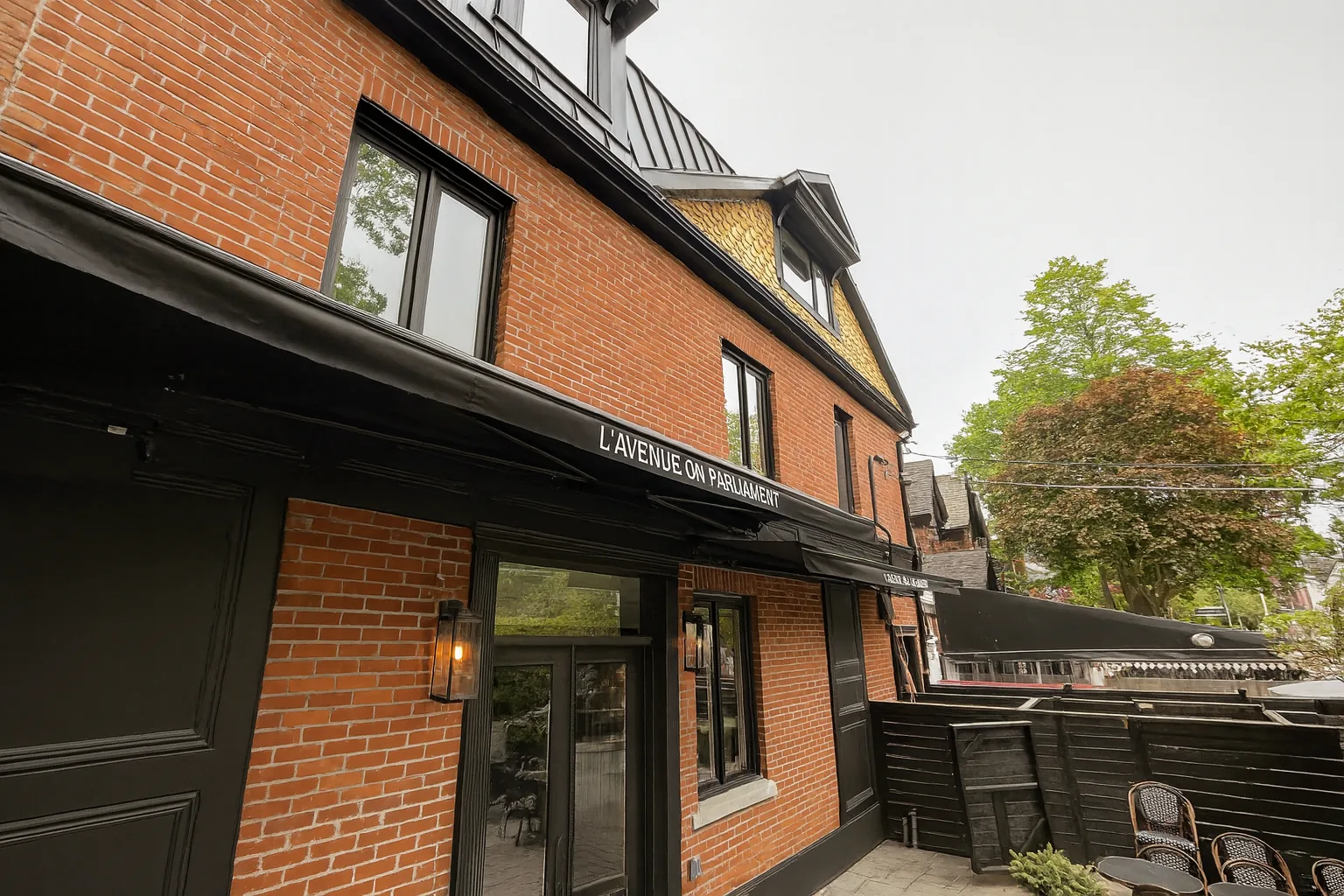
Ontario weather asks a lot of both structures. Summers bring sudden downpours and wind gusts that call for automatic retraction, winters bring snow loads that neither an awning nor a pergola should carry while extended, and many municipalities require a building permit for a posted pergola but not for a wall-mounted awning – check with your local building department before you dig footings. We've completed 23 installs in Toronto and 3 installs in Newmarket since 2022, mostly on decks and patios where homeowners wanted shade they could retract rather than a permanent structure.
More about retractable awnings
Get a free on-site estimate
We'll measure your space, walk through awning and pergola options, and back whichever one you choose with a 5-year warranty, in writing.