

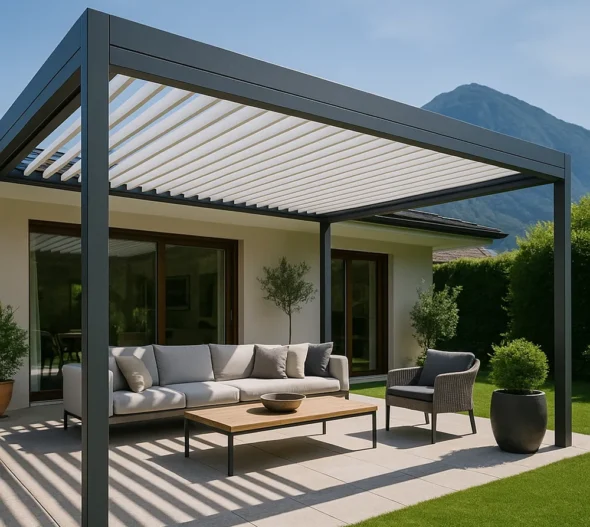
Retractable pergola shade combines an aluminum louvered roof that opens and closes with retractable mesh screens on the sides, run off one remote. The louvres control sun and rain overhead while the screens handle bugs, wind and privacy at the edges, turning a bare patio into a three-season room you can close in minutes.












One roof, two systems, one remote
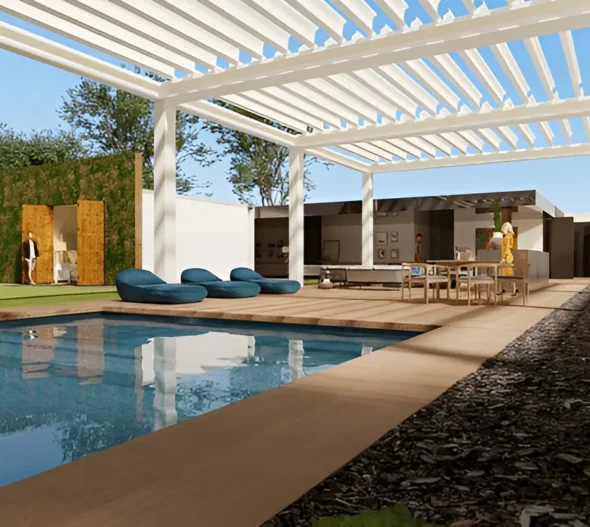
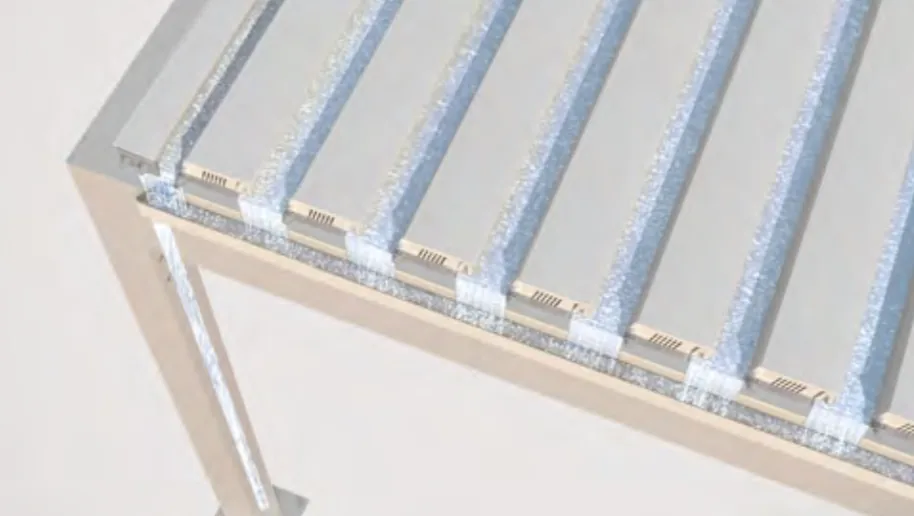
A louvered pergola on its own is an aluminum roof of pivoting slats set on four free-standing posts, or two posts against a wall. The louvres tilt open for airflow and dappled light, flatten for full shade, or close tight to shed rain, with the water running down channels built into the posts instead of dripping onto the patio below.
Add screens and the same posts and beams do double duty. The mesh sits in a track machined into the post and beam profile, so there's no separate screen box bolted on afterward. Retracted, the structure reads as open posts and louvres; closed, the mesh runs top to bottom between posts, sealing that side without adding a wall.
Both systems share one remote and one low-voltage wiring run installed at the same time. One button closes the roof and then drops the screens in sequence; the reverse button lifts the screens first and tilts the roof back open. It's the first question most people ask before they ask about mesh colour, because it means one habit covers the whole structure instead of juggling two separate controls.
Choosing mesh for each side
We offer three mesh types and most backyards end up using more than one. Insect mesh is the open weave that keeps mosquitoes and flies out while still letting air move through – the obvious choice for the side nearest a garden, tree line or anywhere bugs gather at dusk. Privacy mesh has a tighter weave that blocks sightlines from a neighbour's window, a fence line, or the street, without boxing the space in visually from the inside. Solar mesh cuts glare and heat gain on a west or south exposure without fully closing the view off.
Each side is measured and screened independently, so you can drop insect mesh on one side at dusk and leave the solar mesh side open if there's a breeze you want to keep. A typical mix on an Ontario patio is insect mesh facing the yard, solar mesh on the hot afternoon side, and privacy mesh on whichever side faces a neighbour or the street.
Townhomes and condo-attached decks often have rules against permanent enclosures. Because the screens retract fully into the posts and don't change the structure's footprint or add walls, they generally sit outside those restrictions, but rules vary by building and municipality – we always suggest a quick check with the condo board or local building department before you order.
What changes season to season
The same structure behaves differently depending on the month – here's roughly what to expect.
| Season | Roof | Screens | What it feels like |
|---|---|---|---|
| Spring | Open on mild days, closed and pitched on wet ones | Insect mesh starts going up as bugs wake up | Rain runs off overhead, you stay dry underneath |
| Summer | Tilted for shade and airflow, flat at midday | Solar mesh down on the hot side, insect mesh at dusk | Shade without a stuffy tent, bugs stay outside the mesh |
| Fall (shoulder season) | Closed most of the day to hold warmth | Up on two or three sides, heater running | Three walls and a lid, patio usable into the evening |
| Winter | Closed against wind and snow, not insulated | Retracted and stored to avoid ice and wind load | Structure stands, but it's not a room you sit in |
Heaters and the shoulder seasons
Infrared or radiant patio heaters mount to the posts or beams and run off the same electrical work as the screens and louvre motor, usually added during the same install. They're what stretches comfortable use into April and May mornings and September and October evenings – the months when the roof alone isn't quite enough.
The honest limit: a heater warms the people and surfaces directly underneath it, not the whole enclosed volume the way a furnace heats a room. With screens down on a calm evening the difference is noticeable. On a windy night it's a losing battle, because the screens are mesh, not solid glass, and wind still moves through them.
We don't recommend running a heater with the louvres fully closed and no screens up – the warm air just rises into the gaps between slats and is gone. Heaters earn their keep when at least two sides are screened to cut the wind and the roof is tilted low to hold the warm air underneath.

A day in July, a day in October
July: louvres open for breakfast light, closed flat over lunch for shade, solar mesh dropped on the west side by mid-afternoon. At dusk, insect mesh comes down as the mosquitoes start, and the table stays set well past dark without citronella candles doing the work.
October: louvres stay closed most of the day to keep falling leaves and drizzle off the table. By late afternoon, two sides of screens go up and the heater comes on – this is usually the last outdoor space in use before the shovels come out. Once nights sit consistently below freezing, we tell clients to retract the screens fully rather than leave the mesh extended, so it isn't carrying ice or flapping through a wind gust overnight.
A pergola with screens is not a heated sunroom – the aluminum roof and mesh walls cut wind and hold in a patio heater's warmth, but there's no sealed insulation or continuous heat source, so plan on three-season comfort, not a room you use through a Southern Ontario January.
If the roof-plus-screens combination fits your backyard, the product page covers mesh colours, motor options and what the free on-site measure involves.
Frequently Asked Questions
EL
Eugene Ladizinsky
CFO & COO, co-owner of ROLLerUP
Eugene co-owns ROLLerUP, the Newmarket company behind Shading Solutions by ROLLerUP. Every guide on this site is written with our installers and checked against our own job records before it is published. About ROLLerUP.
More about louvered pergolas
Louvered pergolas guides
Compare options
Read next
- Aluminum pergolas in Ontario: what to know before you buy
- Louvered pergolas and Ontario snow: how a roof that opens handles winter
- Motorized louvered pergola features: sensors, lighting, heaters, screens
- Pergola vs gazebo for a Toronto backyard
- Adding privacy screens to a pergola or gazebo
- Retractable-roof pergolas vs louvered roofs
Get a free on-site estimate
We measure your space in person, price the job in writing, and back the install with a 5-year warranty in writing.