

Motorized screens use a small tubular motor hidden inside the roller tube, run off a dedicated outlet or hardwired circuit, and operate from a wall switch, handheld remote, or a connected smart-home system. We add sun sensors on most installs. They cost more than hand-crank screens and suit wide or frequently used openings best.












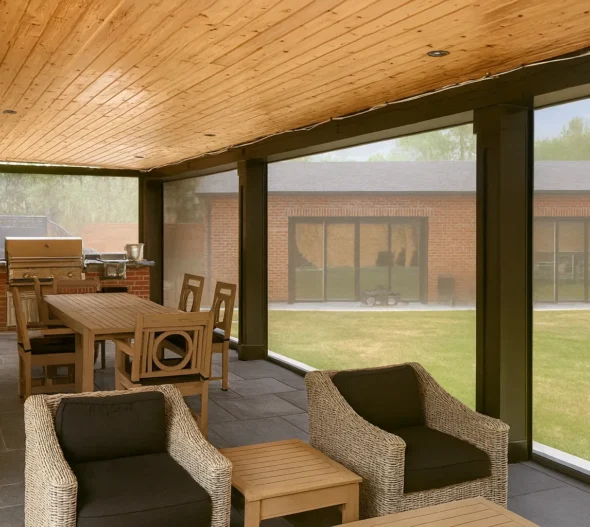
Motorized retractable screens
A motorized retractable screen replaces the hand crank with a small tubular motor sealed inside the roller tube, the same tube the mesh winds onto. The motor is wired to a low-voltage control line that runs to a wall switch, and most installs also get a handheld remote. Add a smart-home interface and the same screen can be scheduled or grouped with other openings on the property. The screen itself – mesh, guide rails, bottom bar – is identical to a hand-crank unit; only the roller tube and the control wiring differ.
Running a motor means running power. On most jobs an electrician pulls a dedicated outlet or hardwires a low-voltage transformer into a junction box near the housing – that part is licensed electrical work and it is not something we do ourselves. What we handle is everything downstream of that outlet: connecting the motor, running the control wiring to the switch or remote receiver, and setting the limits so the screen stops in exactly the right place, top and bottom. On a retrofit, finding a route for that wiring without surface-mounted conduit is usually the single biggest factor in how long the job takes.
We measure the opening on site, confirm the mounting surface can carry the housing and guide rails, and schedule power work with an electrician if the location doesn't already have a nearby circuit. Most installs also get a sun sensor, which extends the screen when direct sun hits the opening, and every motor stops on its own if something is in the way. Both protect the screen from damage and cut down on manual operation – they do not turn the screen into a wind break or a wall, and we tell every customer that up front.
What it solves

Wide garage and patio openings
A hand-crank works fine up to a certain width, but once an opening gets wide the fabric and roller get heavy enough that cranking becomes a two-hand job every time. A motor handles that weight without extra effort, which is why most of the garage-door-sized and multi-panel patio openings we install end up motorized.

Openings you use several times a day
If a screen only comes down once a season, a crank is no hassle. If it goes up and down daily – a kitchen pass-through, a three-season room used for dinner most nights – a wall switch or remote saves real wear on both the screen and the person operating it.

Patios you can use in October, not just July
A motorized screen with clear vinyl panels and a patio heater turns a covered deck into a wind-free room through fall and the milder winter days. The screens are built to stay down in wind and weather and to keep insects, birds and wildlife out, so you extend the living space of the house instead of closing the patio for half the year.

One remote for several screens
Properties with more than one screened opening – a patio and a garage, or screens on two sides of a pool enclosure – can run off a single remote or a grouped smart-home control, so one button lowers every screen on the property instead of working through them one at a time.

Screens that fit into a daily schedule
Pairing the motor with a smart-home system lets you set screens to lower at a set time each evening or tie them to a sunset schedule. It is a convenience feature, not a requirement – the same screen works perfectly well from a wall switch alone if you'd rather skip the extra setup.
Built for Ontario weather, year round
These are not the thin screens that flap, jump their track and get rolled up at the first breeze. Our retractable screens run in magnetic side rails on an aluminum frame, and the numbers below are what set them apart.
30 ft × 20 ftLargest single screen
One screen covers an opening up to 30 feet wide and 20 feet tall, so a full-width patio or a two-storey porch gets one clean panel instead of two or three joined together.
120 km/hDesign wind speed, screen down
Independently evaluated to a 120 km/h (75 mph) design wind speed with the screen fully lowered. That is the kind of wind that strips leaves off trees; the screen stays put and keeps doing its job.
Magnetic railsSelf-correcting side tracks
Rare-earth magnets in each rail pull the mesh edge back into line after a gust or a knock. There is no zipper to jam and no fabric to re-thread, which is the service call most other screens eventually need.
750 lbHolding force across the rails
The magnets hold the mesh with roughly 750 pounds of pull across the pair of rails. A spring-tensioned track manages a few pounds, which is why those screens bow and flap.
Hurricane gradeStorm-rated option for exposed sites
For lakefront, ridge-top and high-rise openings we offer a hurricane-grade version of the same magnetic-rail system, engineered for winds above 250 km/h.
4 seasonsUse the space all year
Insect mesh for summer, solar mesh for heat and glare, privacy weave, or clear vinyl panels that turn a covered patio into a wind-free room you can heat and use through fall and winter. It is the cheapest square footage you will ever add to the house.
Obstacle sensingMotors that stop when they should
The motor senses an obstruction and stops before anything is damaged. Run up to 32 screens and 10 schedules from one app, a wall switch or a hand-held remote, with smart-home control if you want it.
Wildlife outA weighted, locked bottom bar
The heaviest weighted bottom bar in its class, with retention locks at both ends and a keder-locked fabric edge, keeps mosquitoes, wasps, birds, leaves and the neighbourhood wildlife on the right side of the mesh.
5-year warrantyIn writing, from our own crew
Measured, installed and serviced by ROLLerUP's own installers, with a 5-year warranty in writing and a showroom in Newmarket where you can see the screens work.
Size, wind and holding-force figures are the track system's published technical data and independent evaluation; the wind figure applies to the evaluated screen size, and we confirm the rating for your opening at the free on-site measure.
What it costs
Supplied and installed, a single screen has ranged from $1,400 to $23,500 on real jobs since 2022.
Every project is unique. The final figure depends on the size and number of openings, the options you choose and the site itself, and we put it in writing after a free on-site measure.
What moves the number:
- The width and height of the opening – a wider or taller span needs a reinforced track and a bigger motor
- Motorized versus hand-crank operation, which changes both the hardware and the labour
- The mesh grade – a basic insect mesh costs less than a solar-weave or privacy-weave fabric
- How many openings are screened in one visit – several openings on one property share a single measure and install trip
- Access and height of the install – a second-storey or hard-to-reach opening takes longer to mount safely
- The frame and housing colour or finish chosen to match the home
- Whether an existing structure needs modification before the screen can be mounted to it
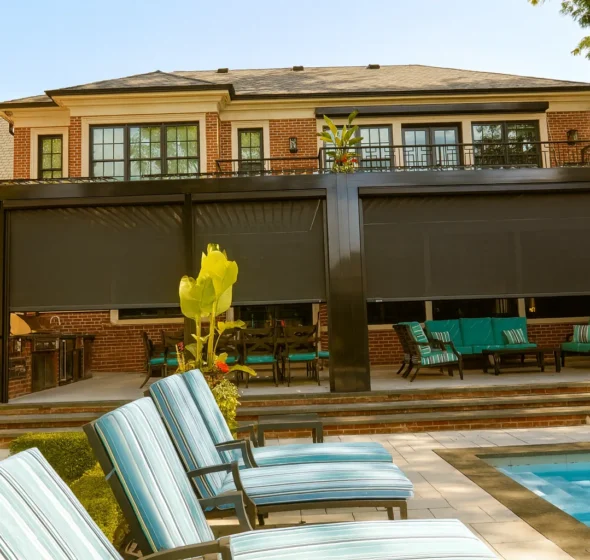
Jobs we've done
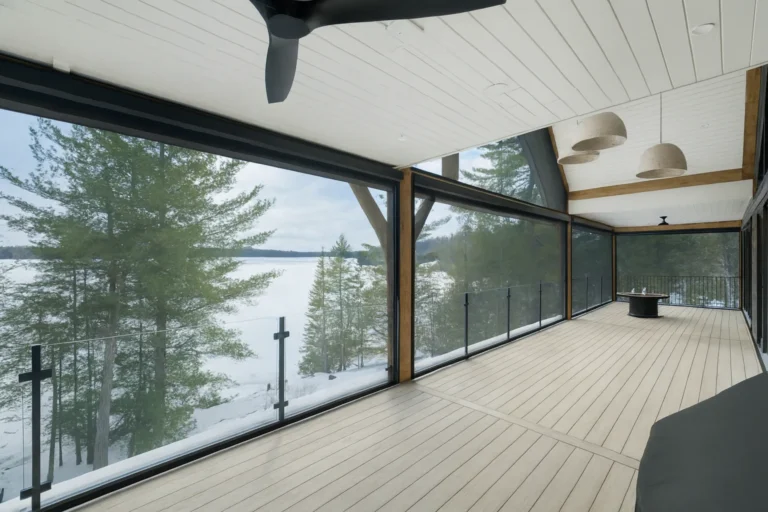
Retractable screens on a covered lakeside deck
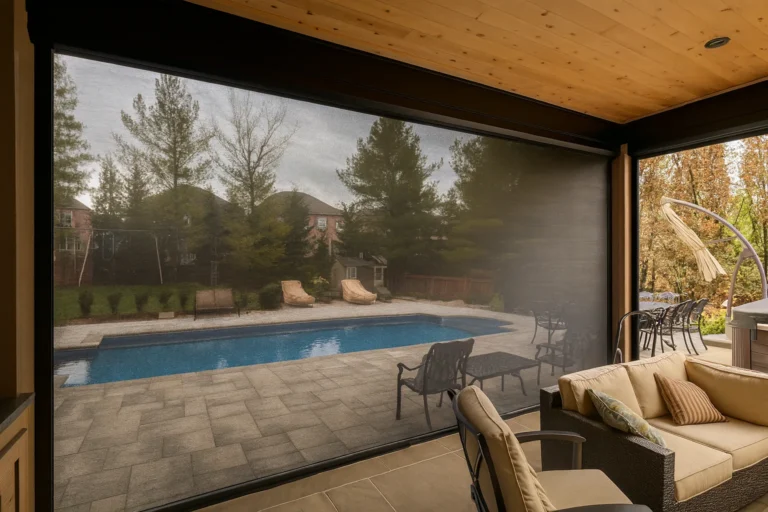
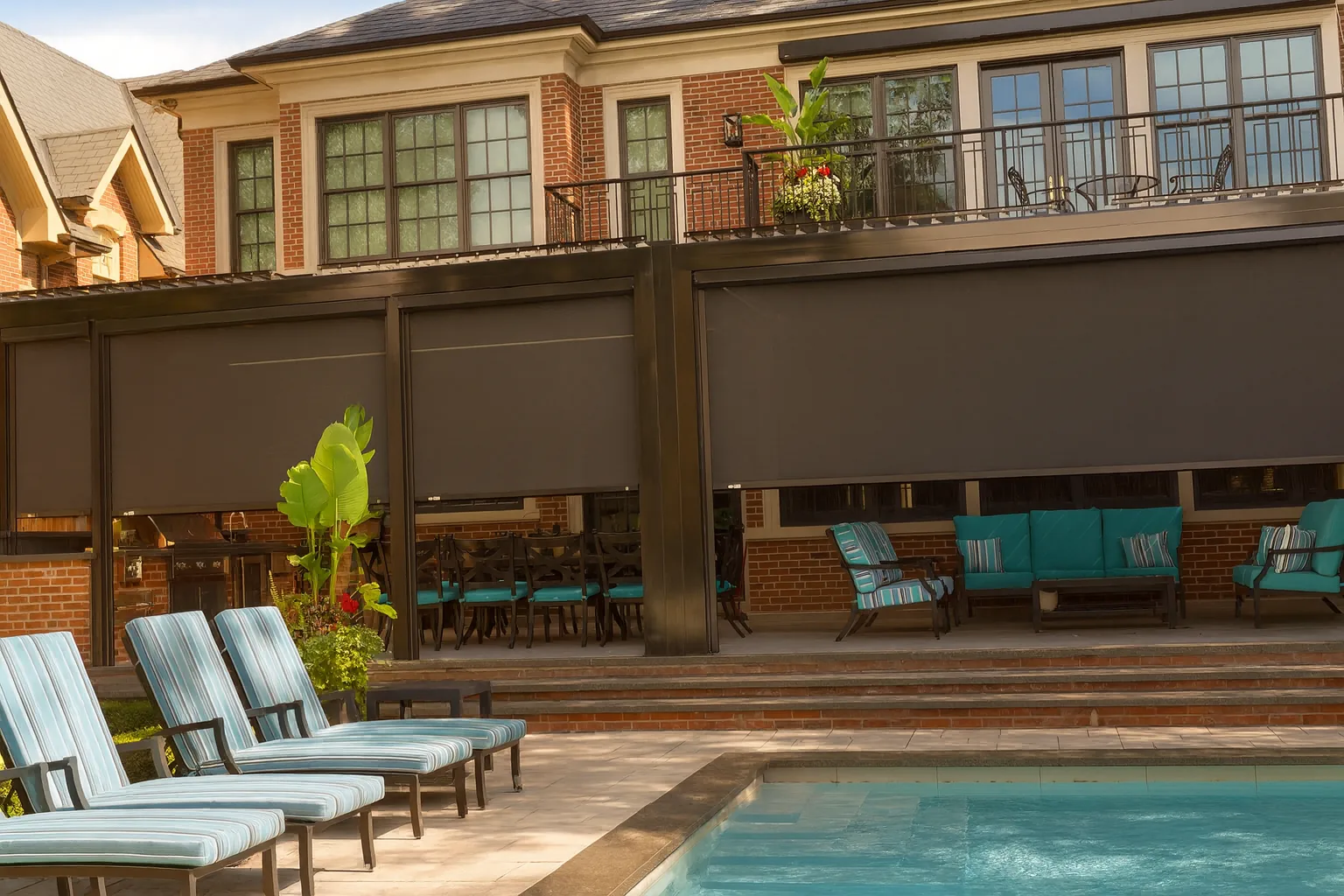
Retractable screen on a covered patio beside a pool, Newmarket
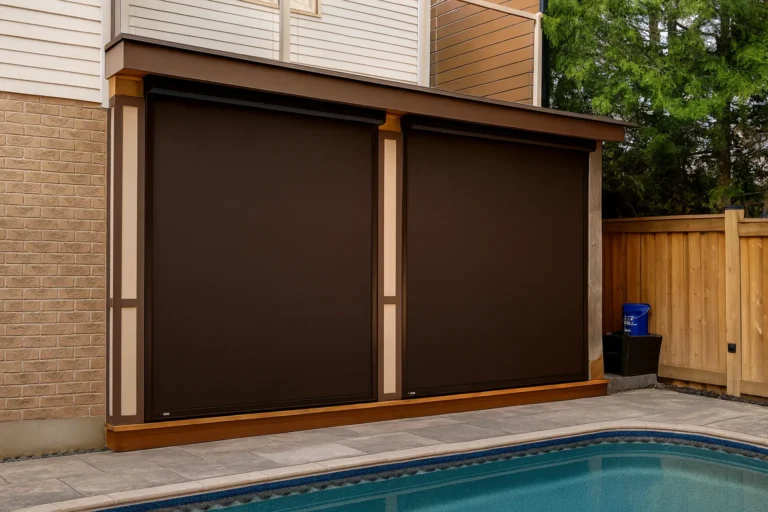
Two motorized retractable screens over a pool patio, Holland Landing
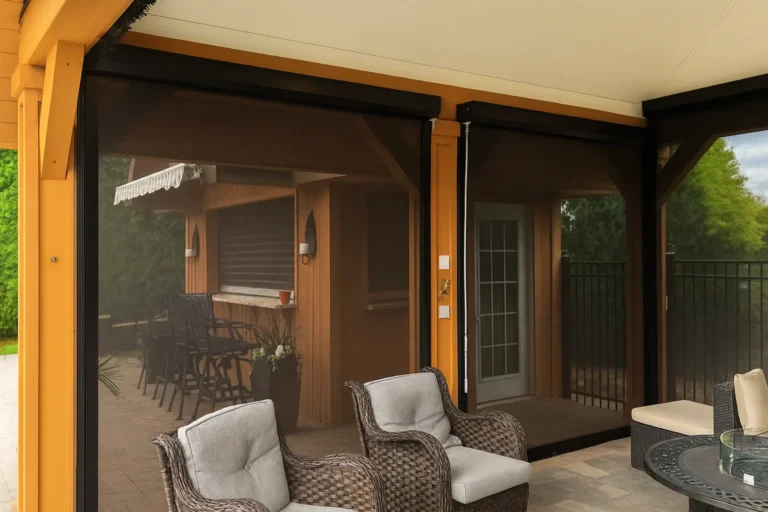
Retractable screens on a cedar-framed covered patio
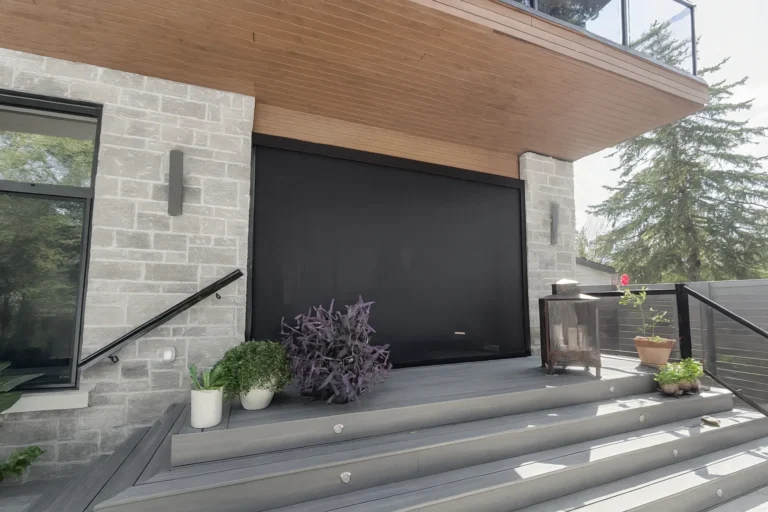
Wide retractable screen on a stone and wood house patio
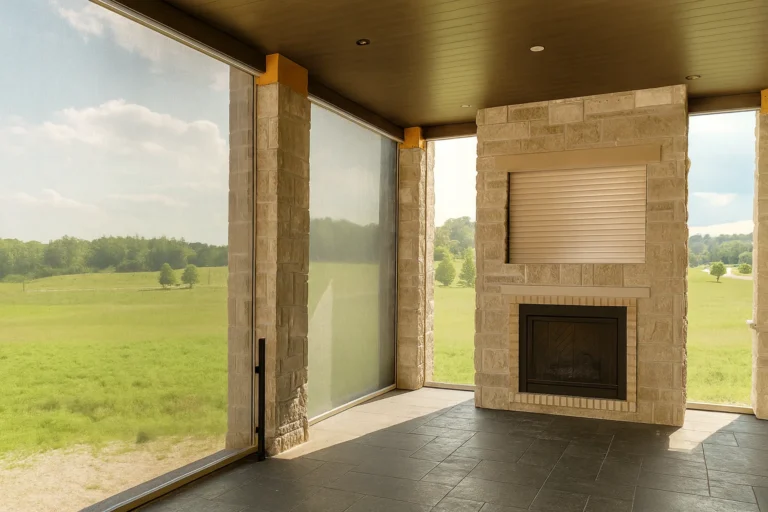
Retractable screens between stone columns on a covered patio
If you're still deciding between motorized and hand-crank, or between a screen and another shading option entirely, our comparison page breaks down the practical differences.
How the ROLLerUP® Process Works
Consultation
We assess your space and recommend the best retractable screen solution for your needs.
Custom Design & Quote
You’ll receive a transparent quote and a design that fits your space precisely.
Professional Installation
Our team installs your screen system with precision and care—on time and on budget.
Post-Installation Support
We stay available after the install for adjustments, care advice and warranty questions.
Frequently Asked Questions
Where we install this
Ontario swings from humid summers to freeze-thaw winters, and that range is hard on anything with moving electronic parts sitting outdoors. We weatherproof the motor and control wiring to handle that swing, and we size the track and motor to Southern Ontario's typical gust patterns rather than a generic default. Electrical work for a dedicated outlet or hardwired circuit falls under provincial electrical code, which is one reason we coordinate with a licensed electrician rather than running that wiring ourselves. We've completed 30 installs in Toronto and 15 installs in Richmond Hill since 2022, most of them patio and garage openings wide enough that a hand-crank wasn't practical.
More about retractable screens
Where we install
- Retractable screens in King City
- Retractable screens in Newmarket
- Retractable screens in Oakville
- Retractable screens in Richmond Hill
- Retractable screens in Stouffville
- Retractable screens, awnings and louvered pergolas in Toronto
- Retractable screens in Uxbridge
- Retractable screens in Vaughan, Woodbridge and Maple
- Retractable screens in Whitby
Get a free on-site estimate
We'll measure the opening, check what power is nearby, and tell you honestly whether motorized or manual is the better fit.