

Screens for patio enclosures are fabric panels that roll down inside aluminum side tracks and disappear into a housing when you are done. A glass enclosure is a permanent room. Screens cost less, need no permit in most cases and keep the view open. Glass wins only if you want a heated room in January.












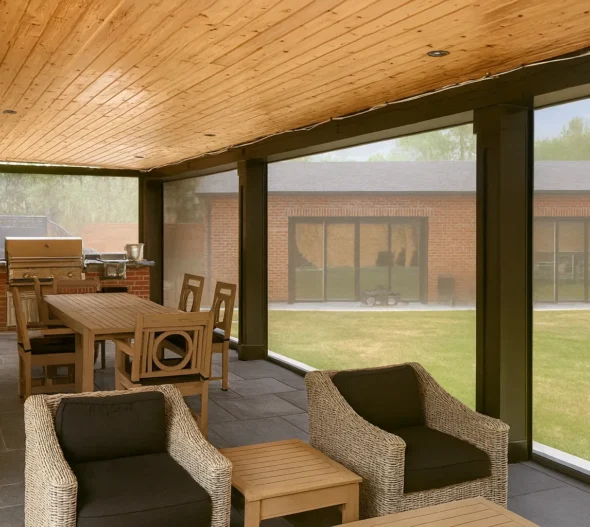
Retractable screens vs glass patio enclosures
A retractable screen is a fabric panel on a roller tube inside a slim aluminum housing, with aluminum side tracks that hold the fabric edges in a zip or cable channel. You press a button or turn a crank, the fabric comes down the tracks and closes the opening. Let it back up and the whole thing is a thin line under the beam. The mesh can be an insect weave, a solar weave that cuts heat and glare while you still see out, or a privacy weave. Nothing about the patio changes: no walls, no new roof load, no glass to wash.
A glass patio enclosure is construction. Framed walls, glazed panels or sliding glass doors, usually a solid roof, sometimes a heater and a floor build-up. It turns an open patio into a room. That room is sealed, quiet and usable in cold weather, and it is also permanent, permitted, and warmer than you want in July unless you add shade or ventilation.
We install the screen side of that choice. We measure the opening ourselves, check what the housing and tracks can be fastened to, run low-voltage or line-voltage wiring for motorised units with an electrician where one is needed, and mount the housing under the beam or on the face of the column. Most openings go in and get tested in a single visit, and we hand over a five-year warranty in writing.
What it solves

Bugs, without losing the view
An insect weave closes the opening so you can eat outside at dusk. Because the fabric rolls away, you are not looking through mesh the rest of the time, and you are not looking through a frame grid either. This is the job a glass enclosure does by sealing the space entirely, at far higher cost and with far less air movement.

Heat and glare on a west-facing patio
A solar weave stops a large share of the sun's heat at the fabric, outside the opening, before it reaches your seating or your sliding doors. Glass does the opposite on a hot afternoon: it traps heat, which is why most glass rooms end up needing shade, a fan or air conditioning added after the fact.

Privacy from the neighbours
A privacy weave reads as a solid panel from outside in daylight while you still see out. Lowered between porch columns or along one side of a deck, it closes the sight line that bothers you and leaves the other sides open. You choose which side to close, and you change your mind day to day.

Wind and light rain on an open side
Side tracks hold the fabric at both edges, so a lowered screen knocks down wind and blowing drizzle well enough to keep a table usable. It is not a weather seal. If you want a space that stays dry and warm through a storm in February, you want glass, and we will tell you so.

Keeping the patio looking like a patio
Housings and tracks are aluminum, powder-coated to match trim or the house colour, and tuck into the structure. Nothing is added to the roofline, nothing changes the footprint of the house, and if you sell, the next owner inherits a patio with shade hardware, not a room they have to maintain.
Built for Ontario weather, year round
These are not the thin screens that flap, jump their track and get rolled up at the first breeze. Our retractable screens run in magnetic side rails on an aluminum frame, and the numbers below are what set them apart.
30 ft × 20 ftLargest single screen
One screen covers an opening up to 30 feet wide and 20 feet tall, so a full-width patio or a two-storey porch gets one clean panel instead of two or three joined together.
120 km/hDesign wind speed, screen down
Independently evaluated to a 120 km/h (75 mph) design wind speed with the screen fully lowered. That is the kind of wind that strips leaves off trees; the screen stays put and keeps doing its job.
Magnetic railsSelf-correcting side tracks
Rare-earth magnets in each rail pull the mesh edge back into line after a gust or a knock. There is no zipper to jam and no fabric to re-thread, which is the service call most other screens eventually need.
750 lbHolding force across the rails
The magnets hold the mesh with roughly 750 pounds of pull across the pair of rails. A spring-tensioned track manages a few pounds, which is why those screens bow and flap.
Hurricane gradeStorm-rated option for exposed sites
For lakefront, ridge-top and high-rise openings we offer a hurricane-grade version of the same magnetic-rail system, engineered for winds above 250 km/h.
4 seasonsUse the space all year
Insect mesh for summer, solar mesh for heat and glare, privacy weave, or clear vinyl panels that turn a covered patio into a wind-free room you can heat and use through fall and winter. It is the cheapest square footage you will ever add to the house.
Obstacle sensingMotors that stop when they should
The motor senses an obstruction and stops before anything is damaged. Run up to 32 screens and 10 schedules from one app, a wall switch or a hand-held remote, with smart-home control if you want it.
Wildlife outA weighted, locked bottom bar
The heaviest weighted bottom bar in its class, with retention locks at both ends and a keder-locked fabric edge, keeps mosquitoes, wasps, birds, leaves and the neighbourhood wildlife on the right side of the mesh.
5-year warrantyIn writing, from our own crew
Measured, installed and serviced by ROLLerUP's own installers, with a 5-year warranty in writing and a showroom in Newmarket where you can see the screens work.
Size, wind and holding-force figures are the track system's published technical data and independent evaluation; the wind figure applies to the evaluated screen size, and we confirm the rating for your opening at the free on-site measure.
What it costs
Supplied and installed, a single screen has ranged from $1,400 to $23,500 on real jobs since 2022.
Every project is unique. The final figure depends on the size and number of openings, the options you choose and the site itself, and we put it in writing after a free on-site measure.
What moves the number:
- The width and height of the opening – a wider or taller span needs a reinforced track and a bigger motor.
- Motorised versus hand-crank operation, which changes both the hardware and the labour.
- The mesh grade – a basic insect mesh costs less than a solar-weave or privacy-weave fabric.
- How many openings are screened in one visit – several openings on one property share a single measure and install trip.
- Access and height of the install – a second-storey or hard-to-reach opening takes longer to mount safely.
- The frame and housing colour or finish chosen to match the home.
- Whether an existing structure needs modification before the screen can be mounted to it.
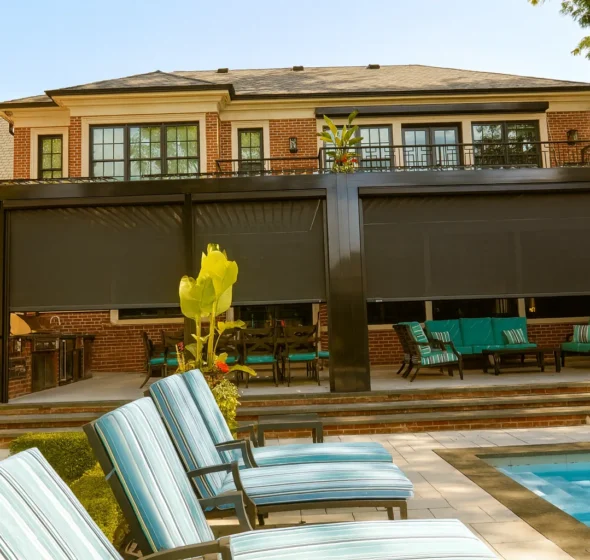
Jobs we've done
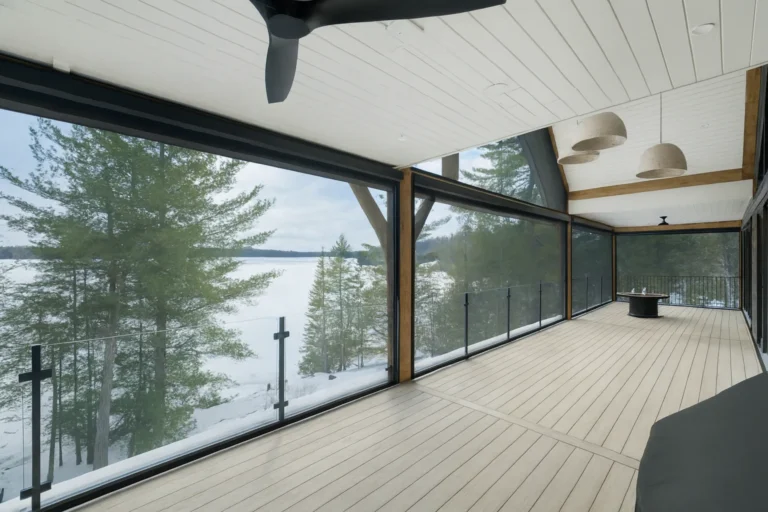
Retractable screens on a covered lakeside deck
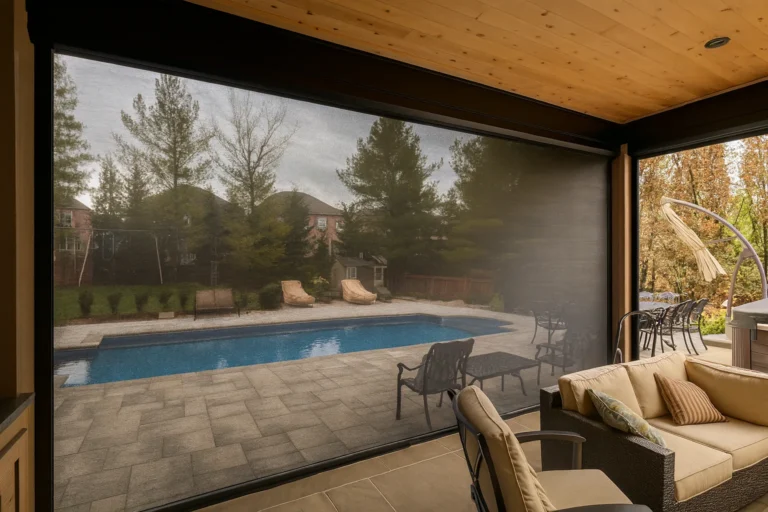
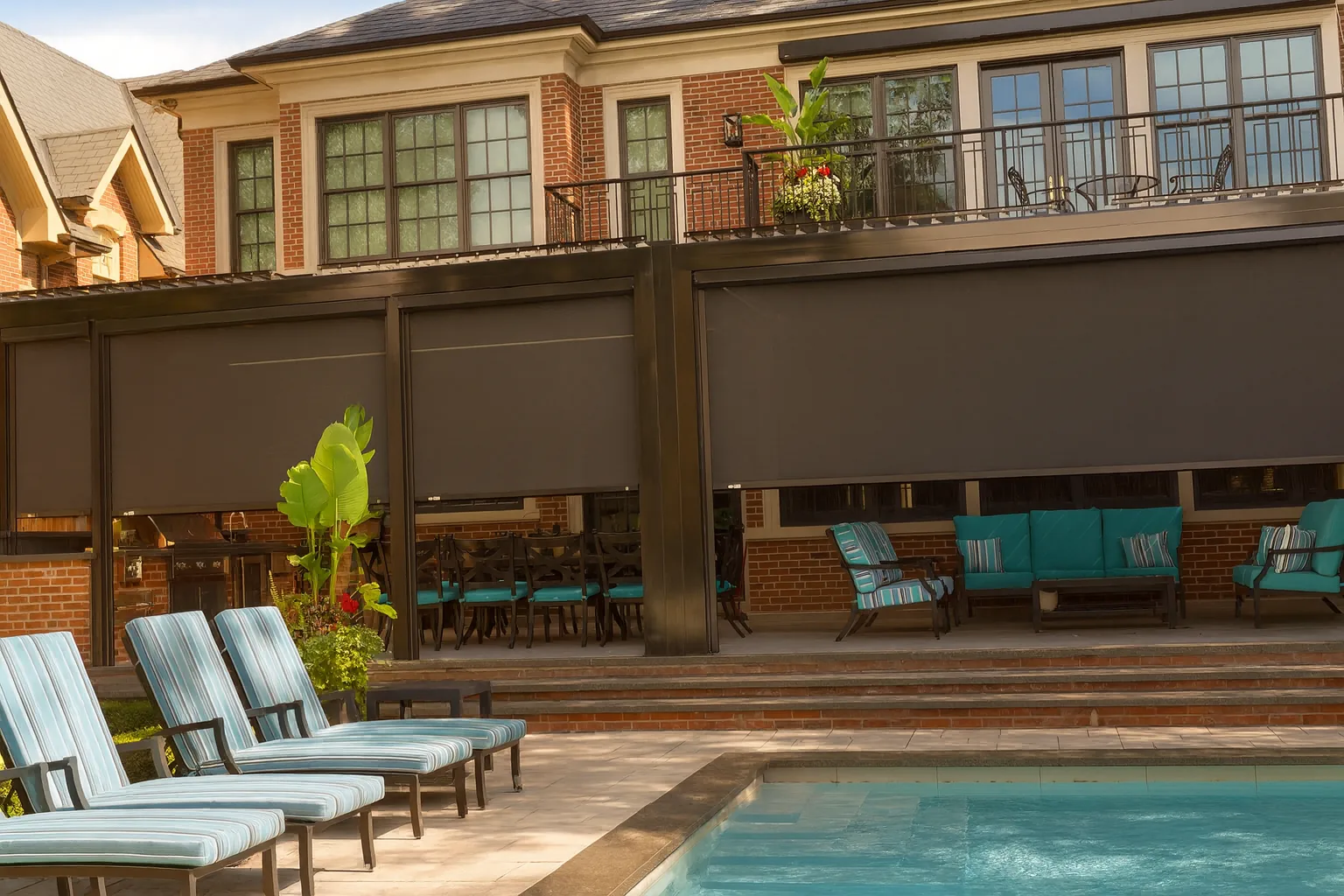
Retractable screen on a covered patio beside a pool, Newmarket
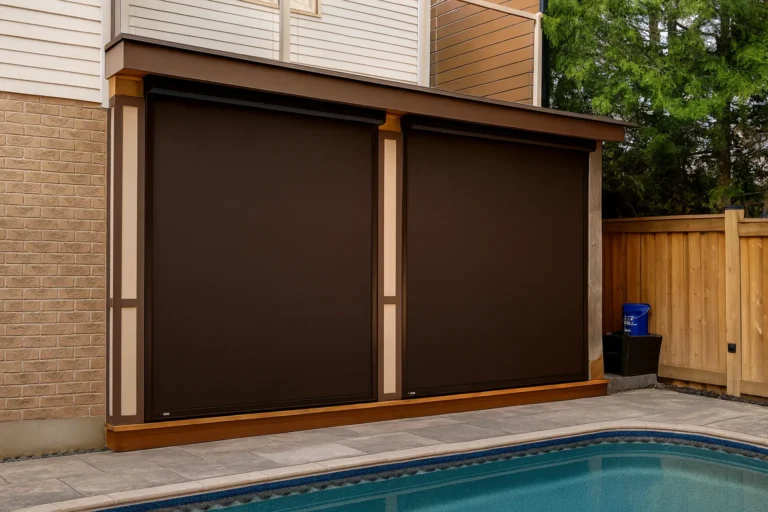
Two motorized retractable screens over a pool patio, Holland Landing
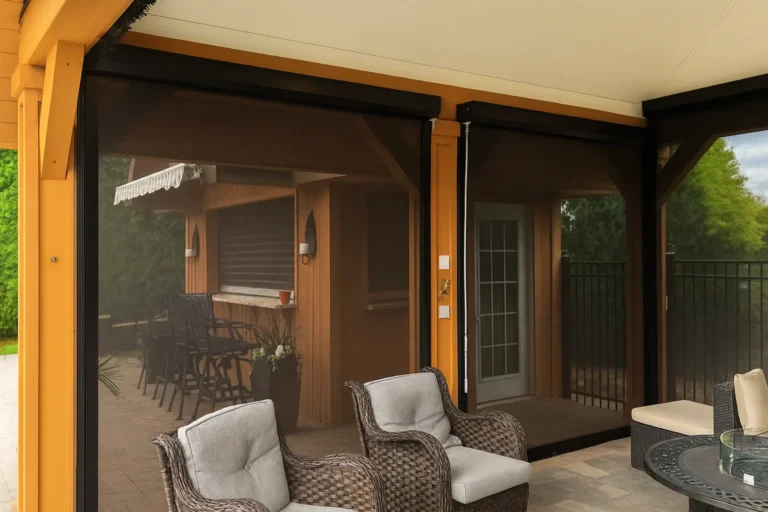
Retractable screens on a cedar-framed covered patio
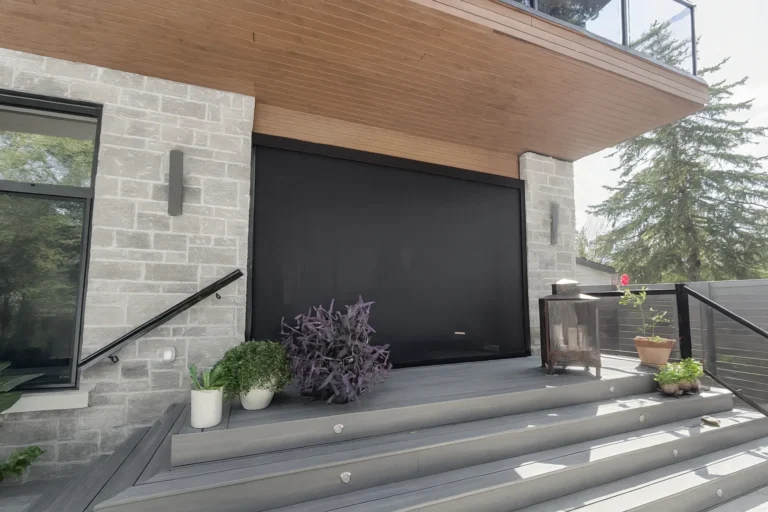
Wide retractable screen on a stone and wood house patio
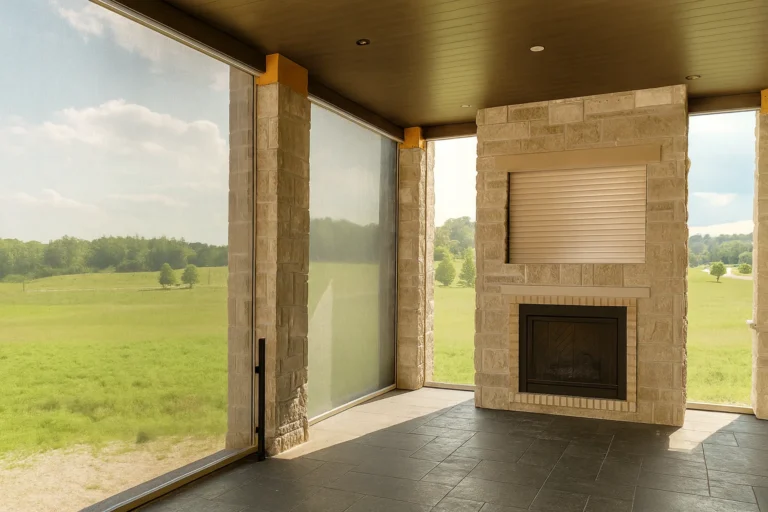
Retractable screens between stone columns on a covered patio
If you have already ruled out a glass room and just want to know how the screens themselves are built, measured and operated, start on the main screens page.
How the ROLLerUP® Process Works
Consultation
We assess your space and recommend the best retractable screen solution for your needs.
Custom Design & Quote
You’ll receive a transparent quote and a design that fits your space precisely.
Professional Installation
Our team installs your screen system with precision and care—on time and on budget.
Post-Installation Support
We stay available after the install for adjustments, care advice and warranty questions.
Frequently Asked Questions
Where we install this
Our weather makes this a real decision rather than a style preference. Ontario summers bring heat and mosquitoes, autumn brings wind off the lake, and winter ends outdoor use for anyone without a heated room. A screen covers the bug and sun months and part of the shoulder season; glass covers all of it and costs accordingly. Local housing helps the screen case too: most GTA patios already sit under a covered porch, a deck roof or a pergola, so the structure a screen needs is in place. We have completed 30 installs in Toronto on this product line since 2022, mostly on openings like those.
More about retractable screens
Where we install
- Retractable screens in King City
- Retractable screens in Newmarket
- Retractable screens in Oakville
- Retractable screens in Richmond Hill
- Retractable screens in Stouffville
- Retractable screens, awnings and louvered pergolas in Toronto
- Retractable screens in Uxbridge
- Retractable screens in Vaughan, Woodbridge and Maple
- Retractable screens in Whitby
Get a free on-site estimate
We measure the opening, tell you honestly whether a screen or a built enclosure suits what you want, and price only the screen work.