

We design, supply and install retractable screens, retractable awnings and louvered pergolas across Toronto, from Leaside and Forest Hill to The Beaches, North York, Etobicoke and Scarborough. Every job is custom-measured for narrow city lots, condo balconies and heritage streets, then installed by our own crew with a 5-year warranty, in writing.









Retractable screens, awnings and louvered pergolas in Toronto
Toronto is where most of our work happens, and three products cover almost every backyard, balcony and storefront we see here. A retractable screen is an aluminum mesh panel that rolls into a slim housing above or beside an opening and pulls down, or across, on a track when you want insect protection or privacy, then disappears when you don't. A retractable awning is a folding-arm aluminum frame with a fabric cover that extends over a deck or patio and retracts flat against the house. A louvered pergola is an aluminum roof of rotating blades that closes against rain, with the water running through hidden gutters and down the posts.
What changes in Toronto is the house, not the product. Narrow-lot semis in East York, Leaside and the older parts of North York and Etobicoke put rear decks within a few metres of the neighbours, so screens get a privacy weave and pergolas get side panels. Century homes in The Beaches and Bloor West Village are solid brick, while a side-split in Scarborough may be brick veneer over wood and a newer build in Etobicoke is often stucco over foam, so awning brackets are specified wall by wall. Condo and townhouse boards downtown and along the midtown corridor have to sign off on anything mounted to the exterior, and heritage conservation districts in Cabbagetown, Rosedale and parts of the Annex can restrict visible changes to the street-facing side. We check all of this at the site visit, before the quote.
Screens and awnings go in within a half-day to a full day. A pergola takes longer: footings below the frost line, or anchoring to a slab we have confirmed is sound, then frame, louvres, drainage, motor and lighting, with the roof run through its full travel while you stand under it. Every install carries a 5-year warranty, in writing, on the hardware and our workmanship, and we come back to Toronto for service calls on what we sold.
What it solves

Narrow lots and close neighbours
Semi-detached streets in Leaside, East York and the older sections of Etobicoke put rear decks within a few metres of each other. A plain insect mesh still lets a silhouette through at dusk. We spec a privacy-weave fabric on these jobs so the deck reads as a solid wall from outside once the screen is down, without blocking airflow or losing the retract-away option in winter.

Condo and townhouse board approval
If you're in a condo or a townhouse with a shared exterior, the board or property manager almost always needs a drawing before they'll approve a retractable screen on a balcony or patio door. We produce the elevation drawing and spec sheet as part of the quote, so the application goes in with everything the board needs the first time.

South- and west-facing decks that bake all afternoon
Two-storey homes with a deck facing south or west catch direct sun from early afternoon through dinner, which is exactly when most Toronto households want to use the backyard. A retractable awning extends in minutes and cuts that direct glare and heat without building anything permanent onto the house.

Older brick and heritage-adjacent facades
Many Toronto streets sit inside heritage conservation districts or have individually listed properties nearby, where altering the front facade is restricted. A retractable awning mounted to a rear or side wall, out of view from the street, is usually the straightforward option on these lots, but we confirm the designation before we quote.

Privacy from the houses behind and above you
Semis and narrow lots in East York and parts of North York put your neighbour's second-floor windows directly over your patio. A louvered roof blocks the downward sightline when it is closed, which fences and trees never do. Add front or side shading panels and the structure closes off the long view down a property line as well.

A longer outdoor season
Most Toronto clients want April to November, not July. That usually means screens on the open sides for mosquitoes near the ravines, infrared heaters mounted in the frame for the cold ends of the season, and dimmable lighting so the space is usable after dark. All of it is planned into the structure at quote stage rather than screwed on afterwards.
What it costs
Supplied and installed, a single screen has ranged from $1,400 to $23,500 on real jobs since 2022.
Every project is unique. The final figure depends on the size and number of openings, the options you choose and the site itself, and we put it in writing after a free on-site measure.
What moves the number:
- which product: a retractable awning starts lowest, a motorised screen on a wide opening sits at the top of the range, and a louvered pergola is quoted per structure after a site visit
- the width and height of the opening or the projection of the awning – a bigger span needs a reinforced track, a stronger arm system or a bigger motor
- motorised versus hand-crank operation, and whether wind, sun or rain sensors are added
- the mesh grade or fabric chosen – a basic insect mesh costs less than a privacy weave; fabric pattern changes the awning price
- the wall behind it – solid brick takes a bracket directly, veneer and stucco need longer fasteners or a mounting plate first
- how many openings are done in one visit – several on one property share a single measure and install trip
- access on a tight Toronto lot – a second-storey opening, a hand-dug footing or materials carried through the house all add labour
Jobs we've done
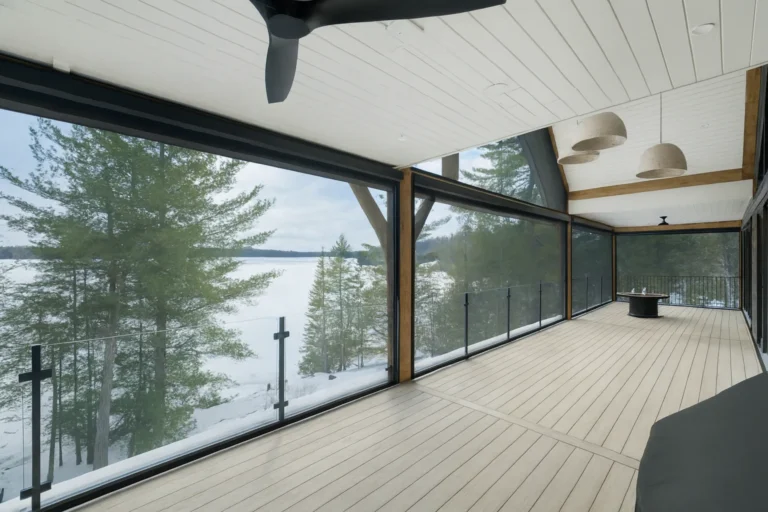
Retractable screens on a covered lakeside deck
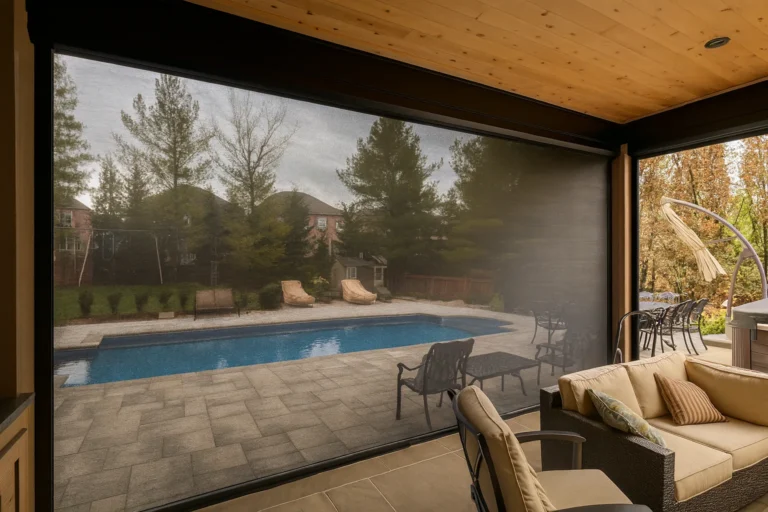
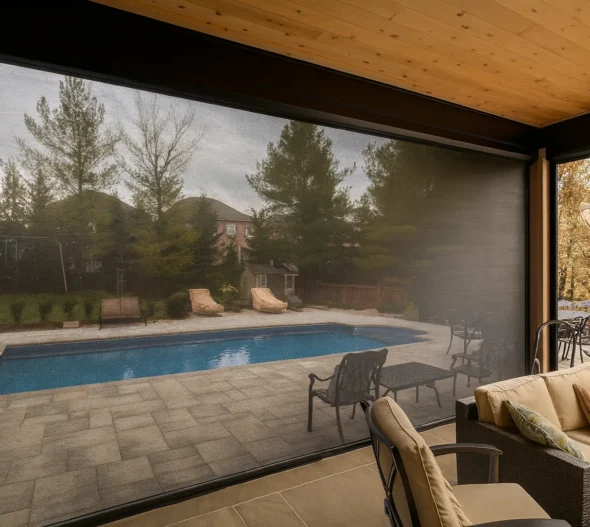
Retractable screen on a covered patio beside a pool, Newmarket
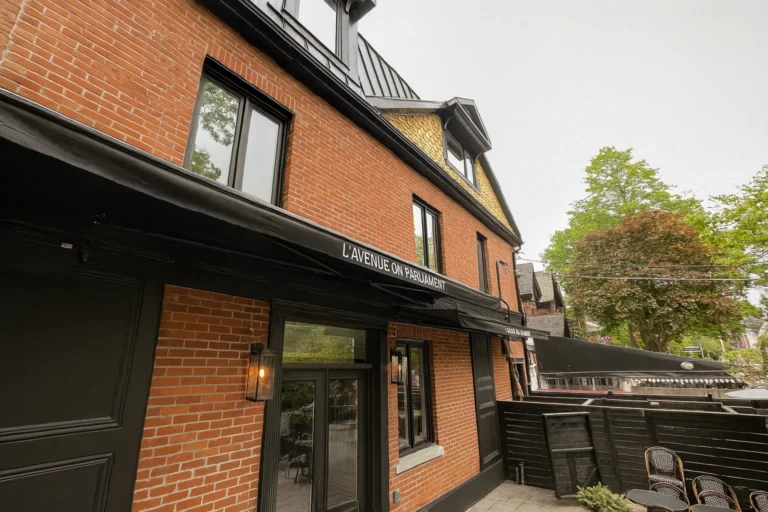
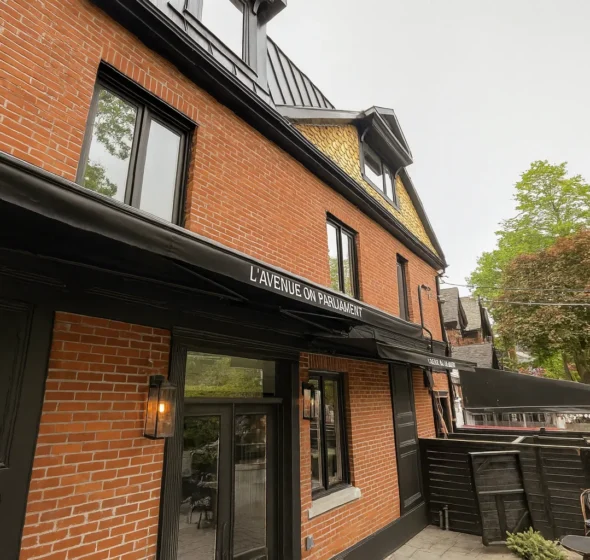
Retractable awning on a restaurant storefront, Toronto
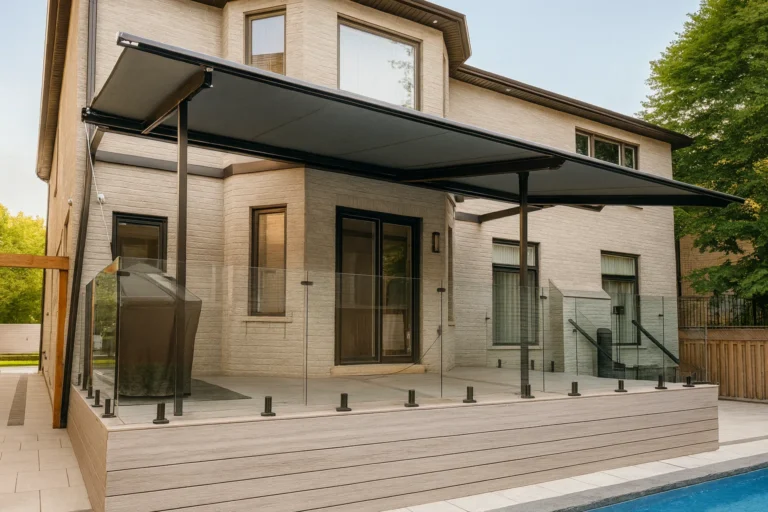
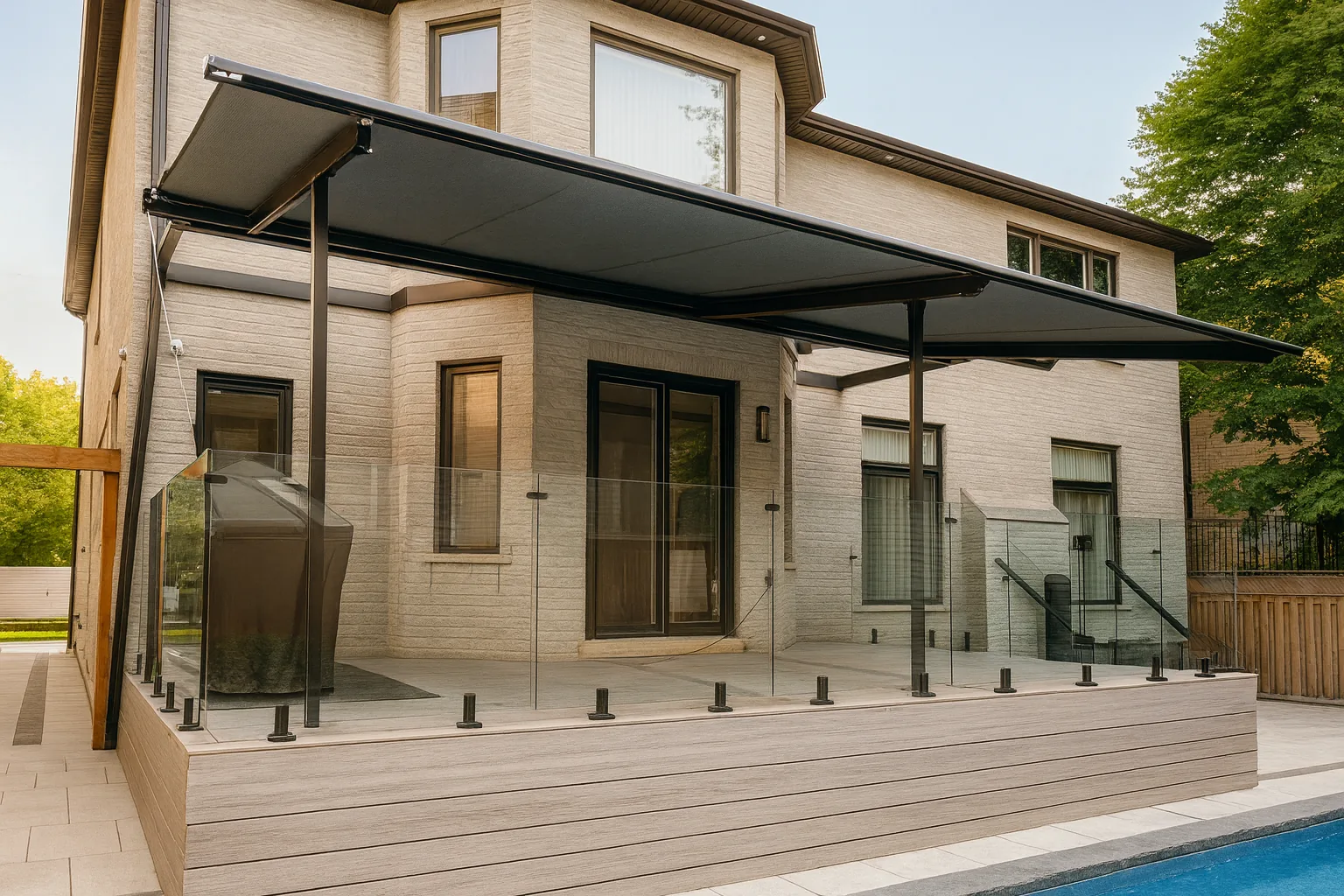
Retractable awning over a glass-railed pool deck
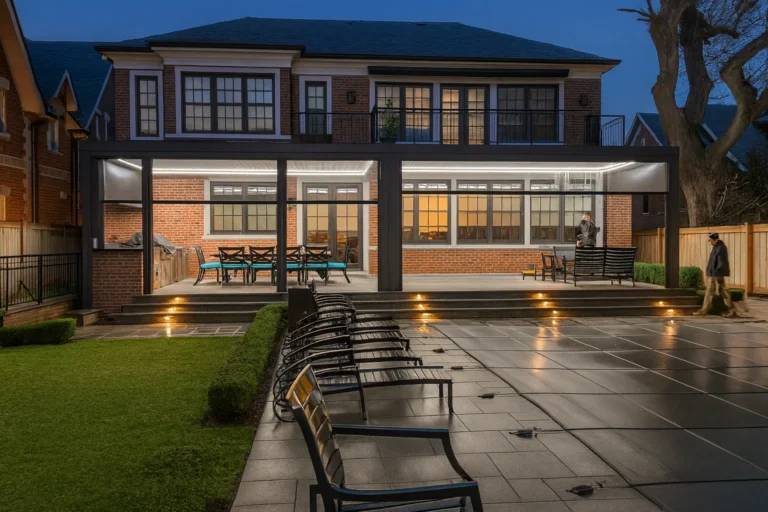
Louvered pergola with integrated lighting at night
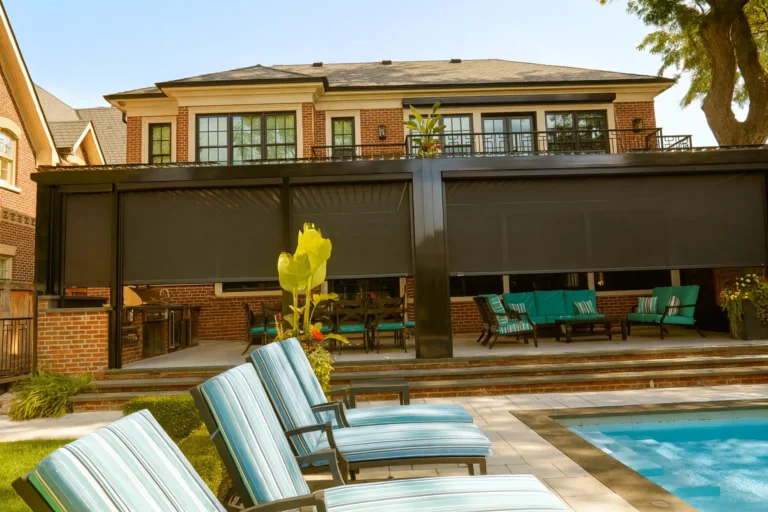
Louvered pergola with retractable screens over a poolside patio
Not sure whether a screen, an awning or a louvered roof is the right answer for your patio? Our comparison pages set them side by side, including what each one does in rain, wind and a Toronto winter.
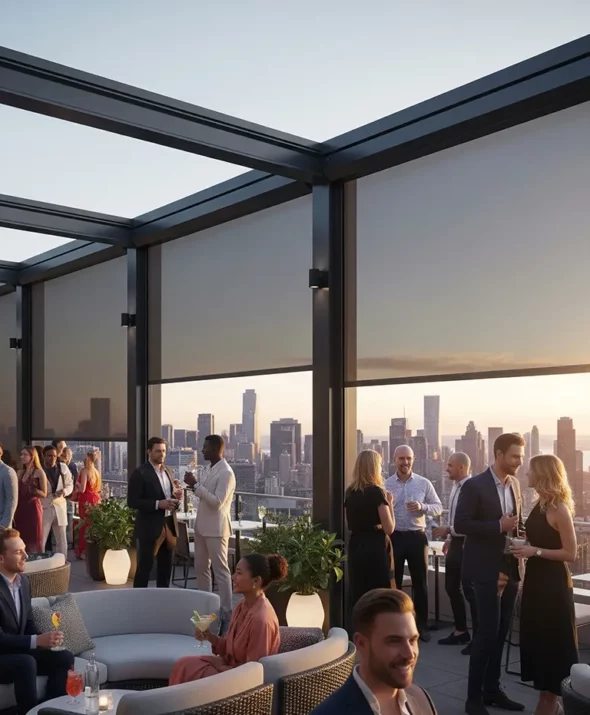
How the ROLLerUP® Process Works
Consultation
We assess your space and recommend the best retractable screen solution for your needs.
Custom Design & Quote
You’ll receive a transparent quote and a design that fits your space precisely.
Professional Installation
Our team installs your screen system with precision and care—on time and on budget.
Post-Installation Support
We stay available after the install for adjustments, care advice and warranty questions.
Frequently Asked Questions
Where we install this
Toronto's housing stock runs from narrow-lot semis in East York and Leaside to mid-century bungalows with covered porches in Scarborough and North York, to condo and townhouse buildings downtown where the board controls what goes on the exterior. Lakefront and ravine lots see the heaviest mosquito pressure from late May into September, which is why screens go on more often than not. Tight lot spacing funnels wind between houses, so awnings here usually get a wind sensor. Side yards on a semi will not take machinery, so pergola footings are often hand-dug and materials come through the house. We've completed more than 50 installs across Toronto since 2022, enough to know which streets need a drawing before the board will sign off and which walls need a mounting plate before a bracket goes up.
More about retractable screens
Where we install
Get a free on-site estimate
We'll measure the opening, patio or wall, check for condo, heritage or zoning requirements at your address, and put the price in writing on the spot.