

Shade sails cost less upfront and look great over a casual seating area, but they need posts, footings, seasonal take-down, and still let rain pool or blow sideways. A retractable awning covers the same space on demand, folds away in high wind, and needs no yearly install-and-remove ritual.










What a sun shade sail does well
A well-tensioned triangle or square sail is a good-looking, inexpensive way to break direct sun over a deck, sandbox or seating nook. The fabric is usually a knitted shade cloth that breathes, so it does not trap heat underneath the way a solid roof does, and the geometry of overlapping sails can look sharp against a modern house.
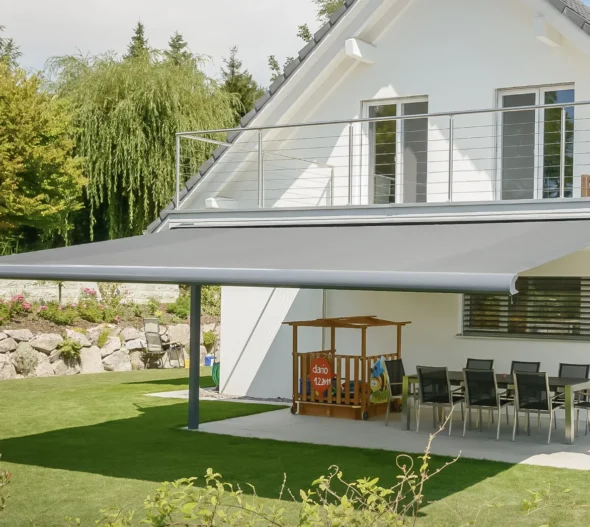
It is also the cheapest way to shade an area that is not right against the house. If the spot you want covered is out in the yard, away from any wall or fascia an awning arm could mount to, a sail strung between posts is often the only practical option short of building a permanent structure.
For a sheltered yard with no exposure to prevailing wind, a sail that is taken down every fall can genuinely last for years. It is a reasonable, low-cost answer for a space you use occasionally and are willing to manage by hand twice a year.
What a shade sail actually needs: posts, footings, tension and take-down
A sail only works if it stays tight. That means every corner needs an anchor point strong enough to hold real tension – usually a post set in a concrete footing, or a lag-bolted bracket into a structural wall or fascia that can take sideways pull, not just downward load. Two or three posts per sail is normal, and each one needs to be sized and set for the wind the sail will catch, not just the weight of the fabric.
Tension has to be re-checked. Shade cloth stretches a little over its first season and loosens further with heat and age, so a sail that was drum-tight in June is often sagging and flapping by August. A sagging sail pools water in the low corner and strains the hardware at the tightest point until something tears.
And it has to come down. Shade cloth is not rated to carry snow load or stand up to an Ontario winter wind, so the honest routine is: take it down in the fall, store it dry, re-hang and re-tension it in the spring. That is an annual chore most homeowners underestimate before year one and skip by year three.
Rain, wind and what winter does to a sail
A standard shade sail is built to cut sun, not shed rain. Even a sail marketed as waterproof is really water-resistant: it sheds a light shower off a steep pitch, but any sail hung close to flat collects water in the belly between anchor points, and that pooled weight is what usually takes a corner bracket out. In a real downpour, water runs off the low edge in a sheet, which is fine over a lawn and unpleasant over a dining table.
Wind is the bigger issue. A sail is a sail – it catches gusts like one, and there is no way to retract it when a wind warning comes through. The common failure we see is not the fabric tearing, it is a post leaning or a bracket pulling out of a wall because the footing was undersized for the load a gust puts on several square metres of taut fabric.
Winter takes the decision out of your hands. Snow load and ice on a slack or half-tensioned sail will stretch the fabric permanently or snap a corner, so leaving one up from November to April is a bet against the weather you will usually lose. That is the trade you are making for the lower price: a product that needs to be put away for roughly half the year.
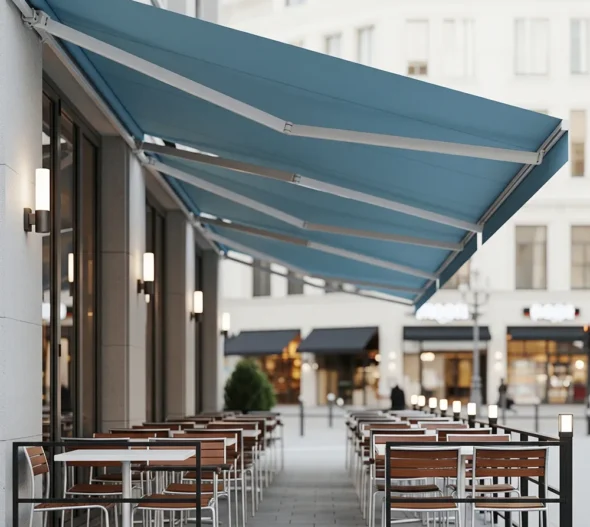
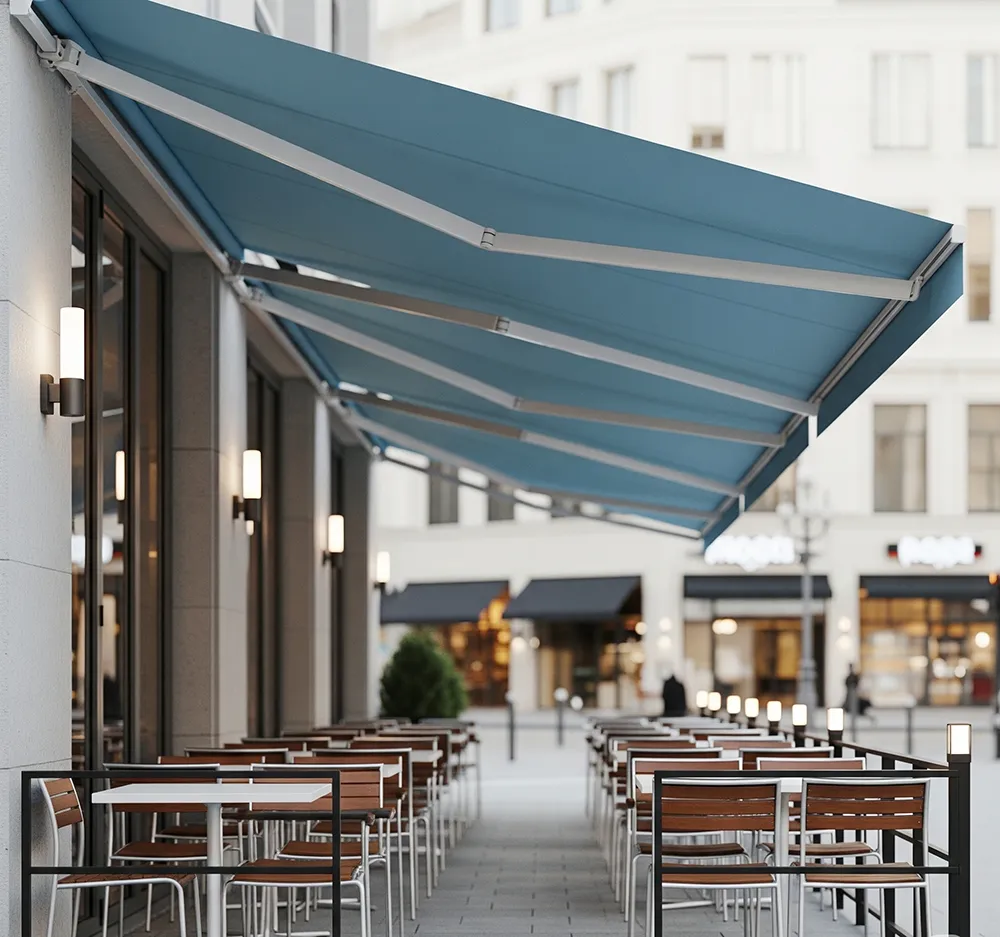
What a retractable awning changes, and what it costs
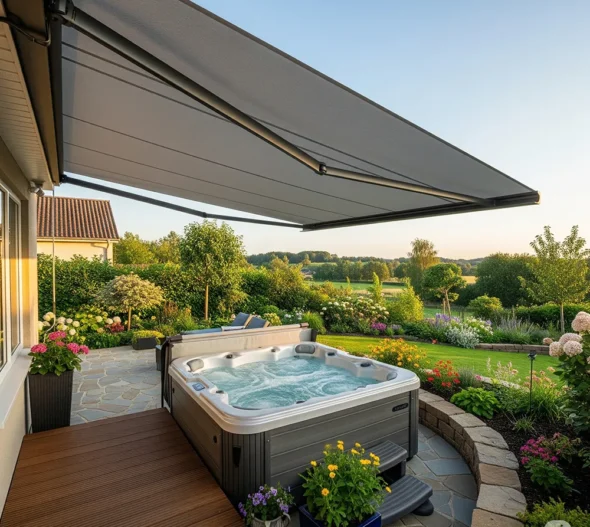
A retractable awning solves the two problems above directly. The fabric only comes out when you want shade, so wind and snow are never a factor – you retract it, the aluminum arms fold flat against the house, and there is nothing exposed to load. There is no annual take-down and re-hang because there is nothing left standing when it is not in use.
It only works, though, where a sail does not have to: mounted to a wall or fascia strong enough to carry the arm system, within reach of the patio it is meant to cover. If your shade need is out in the open yard, away from any structure, an awning cannot follow you there – that is a case where a sail, or a freestanding structure, is still the better fit.
Supplied and installed, real jobs since 2022 have ranged from $2,900 to $21,900 for a retractable awning. Every project is different, and what moves the number is the projection and width of the awning, whether it is motorised or hand-crank, whether wind and sun sensors are added, the fabric grade and pattern, whether the mounting wall needs reinforcing before the bracket goes up, access and height of the install, and the frame finish chosen to match the house.
Shade sail vs retractable awning
Same goal, two different products. Here is where each one actually stands up.
| Factor | Shade sail | Retractable awning |
|---|---|---|
| Upfront cost | Lower | Higher |
| Works away from the house | Yes | No, needs a wall or fascia |
| Rain | Pools or sheets off | Sheds off a pitched, tensioned fabric |
| Wind | No way to retract | Retracts flat against the house |
| Winter | Must be taken down | Retracts, stays mounted year-round |
| Yearly upkeep | Re-tension, remove, re-hang | Occasional clean and check |
| Control | Fixed once hung | Open or closed on demand, motorised option |
Both are aluminum-hardware products when done properly; neither belongs up, untensioned, through an Ontario winter.
If the spot you want shaded is not against your house, a sail is still the right tool – an awning cannot reach it.
The verdict, by yard
What we tell people who ask us which one to buy.
- Open lawn, no wall nearby, used occasionally: a sail, taken down each fall.
- Patio hard against the house, used all season: a retractable awning.
- Windy, exposed lot or a corner that catches gusts: an awning, because a sail has no retract option.
- Condo balcony or a yard with bylaw restrictions on fixed posts: check what footings are allowed before planning a sail.
- Tight budget, flexible on look and willing to do the fall take-down: a sail is the honest cheaper choice.
- Want shade without a seasonal chore every spring and fall: an awning removes that chore entirely.
If your shade need sits against the house, it's worth seeing what a retractable awning covers and costs for your patio before you commit to posts and footings.
Frequently Asked Questions
EL
Eugene Ladizinsky
CFO & COO, co-owner of ROLLerUP
Eugene co-owns ROLLerUP, the Newmarket company behind Shading Solutions by ROLLerUP. Every guide on this site is written with our installers and checked against our own job records before it is published. About ROLLerUP.
More about retractable awnings
Retractable awnings guides
Compare options
Read next
- Awning fabric guide: acrylic, polyester, colours and how long it lasts
- Awning maintenance: cleaning the fabric and winter storage
- Awnings for decks: retractable options and what fits
- Awnings over doors and entries: fixed or retractable?
- Awnings for balconies and condos
- Benefits of retractable awnings, and their limits
Get a free on-site estimate
We'll measure your patio, tell you honestly whether a sail or an awning fits the spot, and put a price in writing.