

Yes, black awnings hold up fine in Ontario, but dark fabric runs hotter under the cassette and shows dust and pollen faster than a mid-tone grey or taupe. A solution-dyed acrylic in black, stored in a cassette when retracted and rinsed off regularly, will outlast a cheaper polyester or vinyl top through sun, rain and pollen season.









Fabric types and what each is good for
Most retractable awning tops sold today use one of three fabric families: solution-dyed acrylic, polyester, and vinyl or laminated fabric. Solution-dyed acrylic is woven from fibre that was coloured before it was spun, not printed or surface-dyed after weaving, so a scratch or heavy wear doesn't expose a lighter colour underneath. It breathes, resists UV well, and is treated to shed water, though it isn't fully waterproof on its own.
Polyester is the common choice in lower-cost roll out awning kits. It can be coated or laminated to become fully waterproof, but uncoated polyester fades faster under UV and holds moisture longer than acrylic, which is where mildew spotting usually starts. It's a reasonable choice for a budget install where the awning is mostly used for shade, not for sitting out through every rain.
Vinyl or laminated fabric is the only option that's genuinely waterproof end to end, which is why it shows up on awnings marketed as a waterproof retractable awning for people who want to leave the top out in light rain. It's stiffer, heavier, and can crack or delaminate at the fold lines after repeated winters. Mildew is less of a food-source problem on vinyl, but trapped moisture underneath still needs to dry out before the fabric goes back into the housing.
- Solution-dyed acrylic: best UV and colour life, water-resistant not waterproof
- Polyester: lower cost, faster fade unless coated, can be made waterproof
- Vinyl or laminated: fully waterproof, stiffer, can crack at fold lines over time
Colour and heat: dark versus light
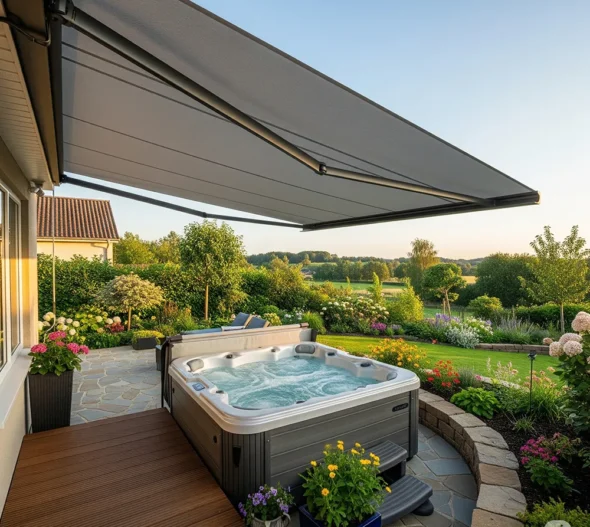
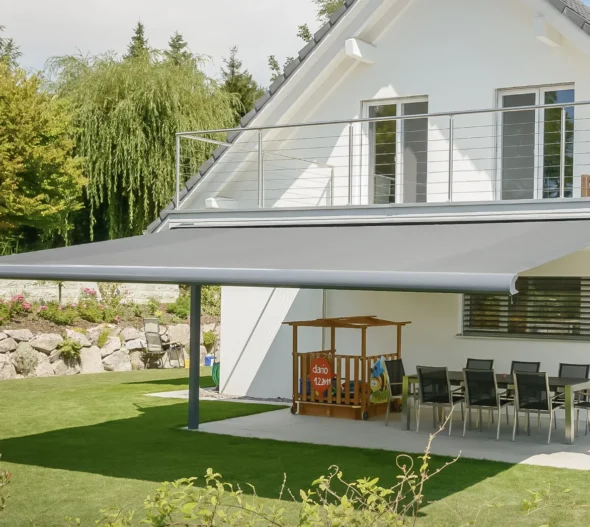
Darker fabric absorbs more solar energy than a light one, so the surface of a black or charcoal top runs noticeably warmer to the touch than a sand or soft grey. The aluminum frame and arm system handle that heat without any issue, but the fabric itself will feel hot in full afternoon sun, especially on a south or west wall. The shade underneath is just as cool either way, since what matters for comfort is blocking direct sun, not the colour doing the blocking.
Dark fabric also doesn't hide dirt the way people expect. Black shows dust, pollen and bird droppings as a visible grey film faster than a mid-tone does, because there's more contrast. Lighter colours hide that kind of grime longer but show mildew spots more obviously when they appear. A modern awning look with black or charcoal arms and a matching dark fabric is a style choice, not a performance downgrade, as long as the fabric is solution-dyed acrylic rather than a cheap coated polyester.
We don't talk anyone out of a west-facing black awning, but we do flag it: UV breaks down every colour eventually, it just shows differently. Dark pigments tend to fade toward grey over time, while light colours tend to yellow. Neither is a fabric defect, it's just how pigment behaves under years of sun.
Fabric types compared
A quick side-by-side of what each fabric does well and where it struggles.
| Fabric | Fade resistance | Water resistance | Mildew resistance | Typical lifespan | Relative cost |
|---|---|---|---|---|---|
| Solution-dyed acrylic | Very good | Water-resistant, not waterproof | Good if dried before rolling in | Longest of the three | Mid to higher |
| Coated polyester | Fair, fades faster uncoated | Can be made waterproof | Weaker, holds moisture | Shorter than acrylic | Lowest |
| Vinyl or laminated | Good, colour locked in coating | Fully waterproof | Strong, little food source for mildew | Long, but can crack at folds | Mid to higher |
Lifespan and fade behaviour depend heavily on exposure, cleaning habits and whether the fabric is stored in a cassette between uses.
Cassette versus open awnings for fabric life
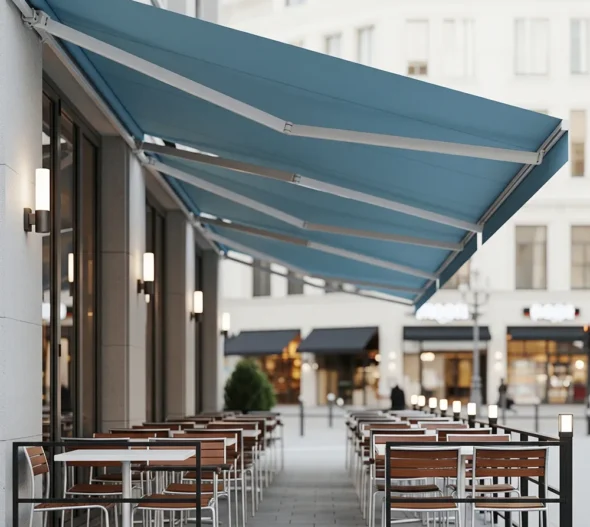
A cassette awning fully wraps the rolled fabric inside an aluminum housing when it's retracted, shielding it from UV, rain, bird droppings and tree sap between uses. An open or semi-open arm system leaves the rolled fabric sitting exposed on top even when it's closed. That's a lower-cost build and it works fine for a patio that gets occasional use, but the fabric ages faster because sun and moisture never fully stop reaching it.
Most fade or mildew complaints we see trace back to one of two things: an open system, or a cassette where the fabric went in still damp. If the top gets rolled in wet, it stays damp inside the housing and mildew sets in even on a good solution-dyed acrylic. The fix is simple but easy to skip when it's raining and you're in a hurry to retract it.
In Ontario the awning sits dormant under snow load for a good part of the year, which is where a cassette earns its keep. It's the only thing keeping ice, slush spray and road salt residue off the fabric all winter, and it's a big part of why a cassette-housed outdoor awning for patio use tends to outlast an exposed-roller setup by a wide margin.
Care and replacement
None of this is complicated, but skipping it is the fastest way to shorten a fabric's life.
- Brush or shake off loose leaves, pollen and debris before retracting
- Let the fabric dry fully before rolling it in, even if that means leaving it extended an extra hour after rain
- Rinse the outside with mild soap and water a couple of times a season, never bleach and never a pressure washer directly on the weave
- Check the underside each spring for mildew spotting; a light vinegar-and-water solution usually treats it if caught early
- If the fabric sags, check the roller tube tension first, most sag on a roll out awning is mechanical, not the fabric stretching
- Plan on replacing the fabric cover before the frame; the aluminum arms, cassette and motor generally outlast the first fabric top
A dark fabric can look fine for a long stretch and then shift colour all at once – inspect it every spring rather than waiting for a visible fade to tell you.
If you're ready to pick a fabric, frame colour and cassette style for your own patio, our awning page covers sizing, motorisation and what a real install involves.
Frequently Asked Questions

EL
Eugene Ladizinsky
CFO & COO, co-owner of ROLLerUP
Eugene co-owns ROLLerUP, the Newmarket company behind Shading Solutions by ROLLerUP. Every guide on this site is written with our installers and checked against our own job records before it is published. About ROLLerUP.
More about retractable awnings
Retractable awnings guides
Compare options
Read next
- Awning maintenance: cleaning the fabric and winter storage
- Awnings for decks: retractable options and what fits
- Awnings over doors and entries: fixed or retractable?
- Awnings for balconies and condos
- Benefits of retractable awnings, and their limits
- Commercial awnings for restaurants and storefronts in the GTA
Get a free on-site estimate
We'll measure your space, talk through fabric and colour options, and give you a written quote before anything is ordered.