

Retractable screen door maintenance is mostly prevention: rinse the mesh and tracks a few times a year, keep the bottom bar and guide rails free of grit, and retract screens before the first snow. Most homeowners handle cleaning themselves; motor issues, bent tracks or torn mesh are the jobs we come out for.












What retractable screen door maintenance actually involves
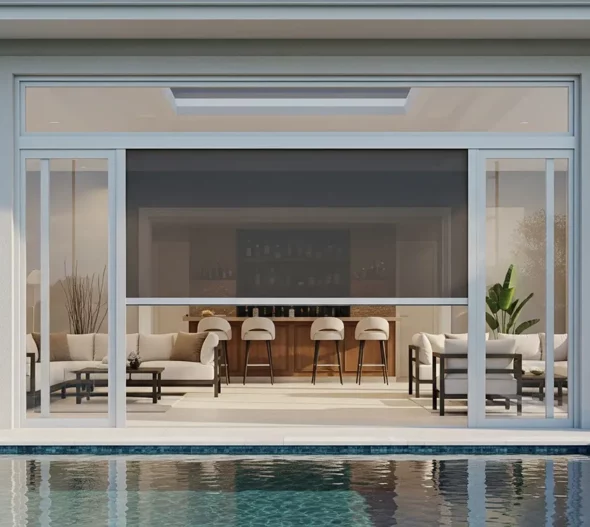
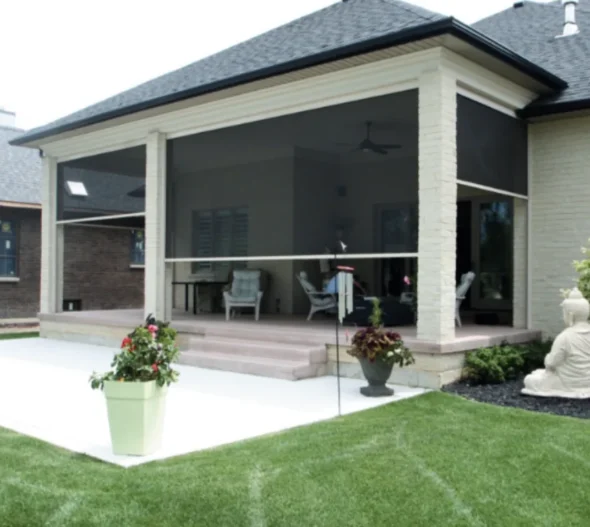
A retractable screen is a simple machine wearing a sleek aluminum housing: mesh wound on a spring-loaded or motorized roller, running inside two guide rails, closing against a bottom bar that seals the opening. Almost everything that goes wrong with one is dirt or alignment, not design. Grit in a track, a bottom bar knocked slightly out of square, a remote that has lost its limits – those three things cause most of the calls we get on screens that are only a few seasons old.
Ontario weather is harder on these than most buyers expect. Pollen in spring, dust and lawn clippings all summer, then leaves and the first wet-then-frozen cycle of November – all of it wants to settle in the track where the bottom bar rides. None of it needs a technician. A homeowner who gives the screen five minutes of attention a few times a year rarely sees a problem before the warranty period is over.
What does need a technician: anything involving the motor's internal limit settings, a bent or twisted track, a torn or punctured mesh panel, or a housing that has come loose from the wall. We would rather talk you through a five-minute fix over the phone than send a truck for something you can clear yourself – but we would also rather you call before you force a jammed screen, because that's how a simple track clean turns into a bent bottom bar and a real repair.
Cleaning the mesh, tracks and housing
Mesh: a soft brush and a garden hose on a gentle setting is all it needs. Mild dish soap in water lifts pollen and grime; rinse it off fully so no residue is left to attract dust. Skip the pressure washer – direct pressure at close range splits the weave on fiberglass and solar-mesh fabrics, and once a panel is torn it has to be replaced, not patched. Skip degreasers, solvents and anything with ammonia too; they dull the mesh coating and the aluminum finish over time.
Tracks and the bottom bar: vacuum the guide rails with a brush attachment to pull out leaves, seed pods and grit before they get ground in by the bottom bar sliding over them. A damp cloth gets the rest. Let the track dry fully before you retract the screen – water trapped in the rail is one of the few things that genuinely hurts a screen over an Ontario winter, because it freezes, expands, and can crack the rail's weather seal.
Housing: a wipe-down with a damp cloth keeps the exterior looking right, but check the weep holes along the bottom of the housing too – they drain condensation and rain, and they clog with pollen and dust more than owners expect. If the screen starts rolling unevenly or feels gritty going up and down, a light silicone-based lubricant on the rollers (never an oil-based one, which attracts and holds dust) usually sorts it out.
One thing we will not do: install a screen where the opening or the structure around it isn't sound enough to hold the track straight. A crooked track is the single fastest way to turn routine cleaning into a recurring repair, and no amount of maintenance fixes an opening that was never square to begin with.
A seasonal checklist
Three check-ins a year cover almost everything.
Spring start-up
Clear winter grit from the tracks, inspect the mesh for any punctures from stored patio furniture or ice, and run the screen up and down a few times to confirm it's rolling smoothly before bug season starts.
Mid-summer check
Rinse the mesh after a dry, dusty stretch, check that weep holes in the housing are clear, and replace remote batteries if the response has gotten slow or inconsistent.
Before winter
Clean and fully dry the tracks, retract the screen into its housing, and confirm end caps and fasteners are snug – wind load on a loose housing is worse once snow and ice add weight to it. If your screen has a manual override, check it still turns freely before you need it in a cold snap.
Common problems: symptom, cause and who fixes it
Most of these are a five-minute homeowner fix. A few are not – and forcing the wrong ones makes them worse.
| Symptom | Likely cause | Fix it yourself or call |
|---|---|---|
| Screen sticks partway | Grit or debris packed in the track | Yourself – clean the track |
| Remote stops responding | Dead battery or lost motor limits | Yourself first – swap battery, re-sync; call if it keeps happening |
| Mesh sags or bottom bar sits crooked | Bent bottom bar or a track knocked out of alignment | Call for service |
| Mesh is torn or punctured | Pet claws, hail, or closing against an obstruction | Call for service – mesh panels are replaced, not patched |
| Screen reverses on its own mid-close | Obstruction sensor triggered, or a motor fault | Clear the obstruction yourself; call if it continues with nothing in the way |
| Housing rattles in wind | Loose end caps or fasteners | Yourself – tighten; call if it keeps loosening |
| Screen won't move at all, motorized | Power interruption or failed motor | Call for service |
If a screen refuses to move and you can feel resistance, stop – a stuck motor or jammed track almost always gets worse, not better, if you keep pressing the remote.
Motor care: limits, remotes and power cuts
A motorized screen's 'limits' are just stop points set during install, telling the motor exactly where fully open and fully closed are. Limits can drift after a power outage, a breaker trip, or sometimes just age, and the symptom is usually a screen that stops short, overshoots, or reverses before it's fully closed. A reset is a short button sequence on the wall switch or remote and most owners can do it themselves with the instructions we leave after install; if the limits keep drifting after a reset, that points to a motor issue worth a service call rather than a repeat reset.
Power cuts are the other common worry. If the screen was down when the power went out, it will usually stay put until power returns – it isn't going to retract or extend on its own. Some units have a manual override crank for exactly this situation; if yours doesn't and you need the opening clear in a hurry, that's a call to us rather than something to force by hand.
Remotes are the cheapest part to maintain and the easiest to neglect. Replace the battery on a schedule rather than waiting for it to fail, and don't leave a spare sitting on a sun-facing windowsill – heat warps the plastic housing faster than people expect. If you're ever unsure whether a problem is the remote, the motor, or the limits, a quick call usually sorts out which one it is before you buy a part you didn't need.
Treat a stuck track like a stuck zipper, not a stuck door: clear the debris first, never force it, and you'll avoid turning a cleaning job into a bent bottom bar.
If cleaning and resets aren't keeping your screens reliable, the issue may be the install or the screen itself rather than upkeep – our retractable screens page covers what goes into a proper measure and fit.
Frequently Asked Questions
EL
Eugene Ladizinsky
CFO & COO, co-owner of ROLLerUP
Eugene co-owns ROLLerUP, the Newmarket company behind Shading Solutions by ROLLerUP. Every guide on this site is written with our installers and checked against our own job records before it is published. About ROLLerUP.
More about retractable screens
Retractable screens guides
Compare options
Read next
- Are retractable screens worth it? An honest answer
- Balcony privacy screens for condos and apartments
- Deck privacy screens: fixed panels or a retractable screen?
- Garage door screens: turning a garage into a screened room
- How much wind can a retractable screen take?
- How to choose a retractable screen door in Canada
Where we install
- Retractable screens in King City
- Retractable screens in Newmarket
- Retractable screens in Oakville
- Retractable screens in Richmond Hill
- Retractable screens in Stouffville
- Retractable screens, awnings and louvered pergolas in Toronto
- Retractable screens in Uxbridge
- Retractable screens in Vaughan, Woodbridge and Maple
- Retractable screens in Whitby
Get a free on-site estimate
We'll measure your opening, walk through mesh and motor options, and give you a price in writing before anything is ordered.